


Feeling drained and looking for alternatives to caffeine? This guide covers practical ways to increase energy naturally. Instead of relying on caffeine, which can disrupt sleep and cause energy crashes, you can focus on sustainable strategies that tackle the root causes of fatigue. Here’s what you can do:
- Eat smarter: Choose whole grains, protein, and healthy fats to stabilize blood sugar and avoid energy dips.
- Stay hydrated: Even mild dehydration can sap energy, so aim to drink enough water daily.
- Move more: Short walks or light exercises can improve circulation and boost cellular energy production.
- Get sunlight: Just 10-15 minutes daily can enhance mood, support Vitamin D production, and align your body’s clock.
- Try supplements: Cocoa flavanols and adaptogens like Rhodiola or Ginseng may help improve blood flow and manage stress.
- Prioritize sleep: Quality rest (7–9 hours) is crucial for recharging energy stores and reducing stress.
These steps focus on long-term energy management through better nutrition, movement, hydration, and sleep habits. Ready to feel energized all day? Let’s dive into the details.
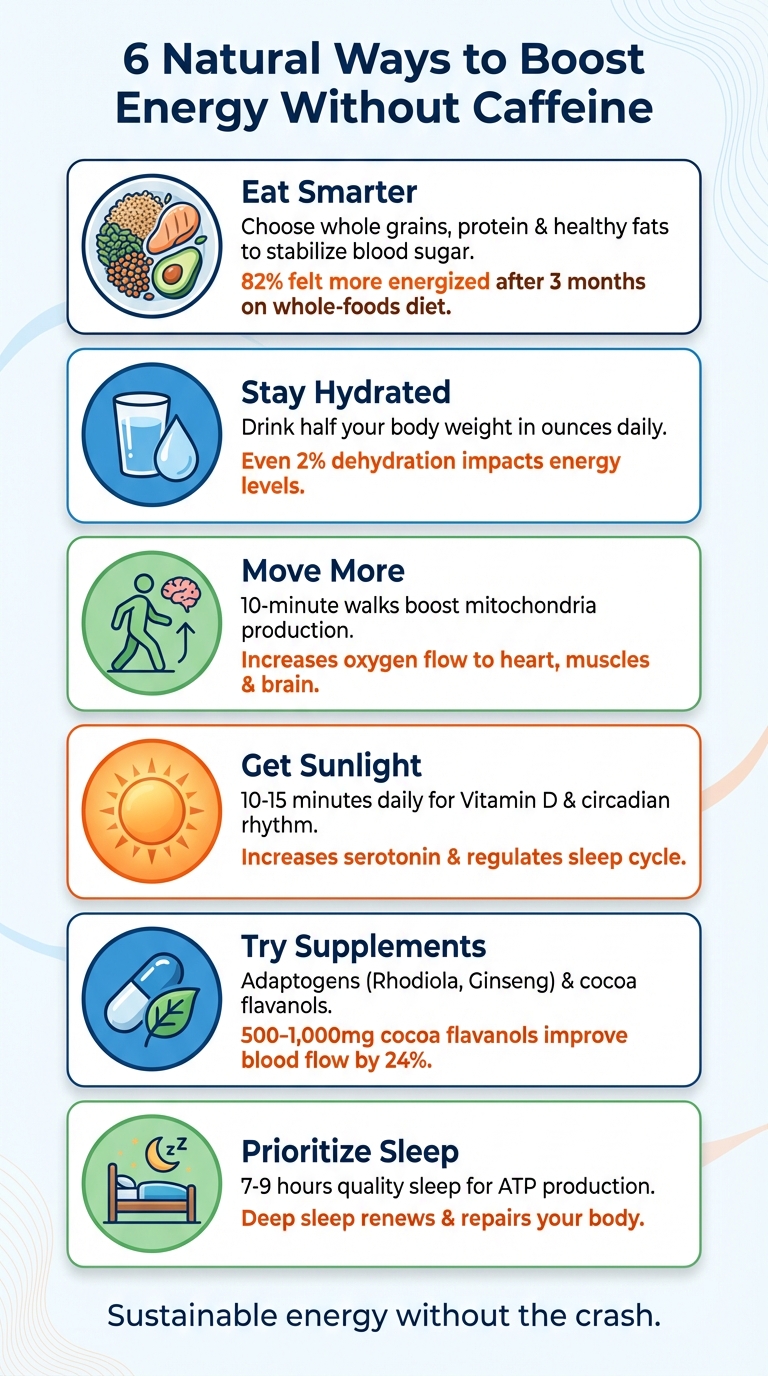
6 Natural Ways to Boost Energy Without Caffeine
3 Natural Ways to Boost Energy Without Caffeine
sbb-itb-e973f61
Build Energy Through Better Nutrition
The food you eat plays a huge role in maintaining steady energy throughout the day. Opting for foods that release energy gradually can help you avoid the dreaded energy crashes often caused by refined carbohydrates. Prioritizing whole-food carbohydrates is an effective way to keep your energy levels stable.
Eat Whole Foods for Stable Blood Sugar
Your brain relies on a constant supply of glucose since it stores very little energy on its own. Consuming simple sugars - like those found in candy, white bread, or sugary cereals - can cause a quick spike in blood sugar, followed by a sharp drop, leaving you feeling drained. Dr. Mariann Giles from Ohio State Integrative Medicine explains:
"Energy drinks can be even more of a problem because they usually contain large amounts of sugar and more caffeine than coffee. This causes blood sugar spikes that can give you some quick energy, but these spikes are followed by extreme drops in blood sugar levels that leave you tired and wanting more sugar".
The solution? Focus on complex carbohydrates that release glucose slowly. Whole grains such as oats, quinoa, and brown rice provide a steady energy supply, helping you avoid the spike-and-crash cycle. As Giana DiMaria, a registered dietitian at New York Medical College, notes:
"Carbohydrates are the body's main energy source... Complex carbs (like whole grains and fruit) break down slowly, thereby giving you a steady source of energy".
Pairing these carbohydrates with protein and healthy fats can further stabilize your energy. Protein digests more slowly than carbs, which helps regulate blood sugar levels and prevents energy dips after meals. Easy meal ideas like oatmeal topped with walnuts or an apple paired with cheese can provide balanced energy. Additionally, foods high in fiber - like beans, lentils, and berries - slow sugar absorption, keeping your energy consistent throughout the day. In fact, a study on personalized nutrition found that 82% of participants reported feeling more energized after just three months of following a whole-foods-based plan.
Add Naturalis High Flavanol Cocoa to Your Diet
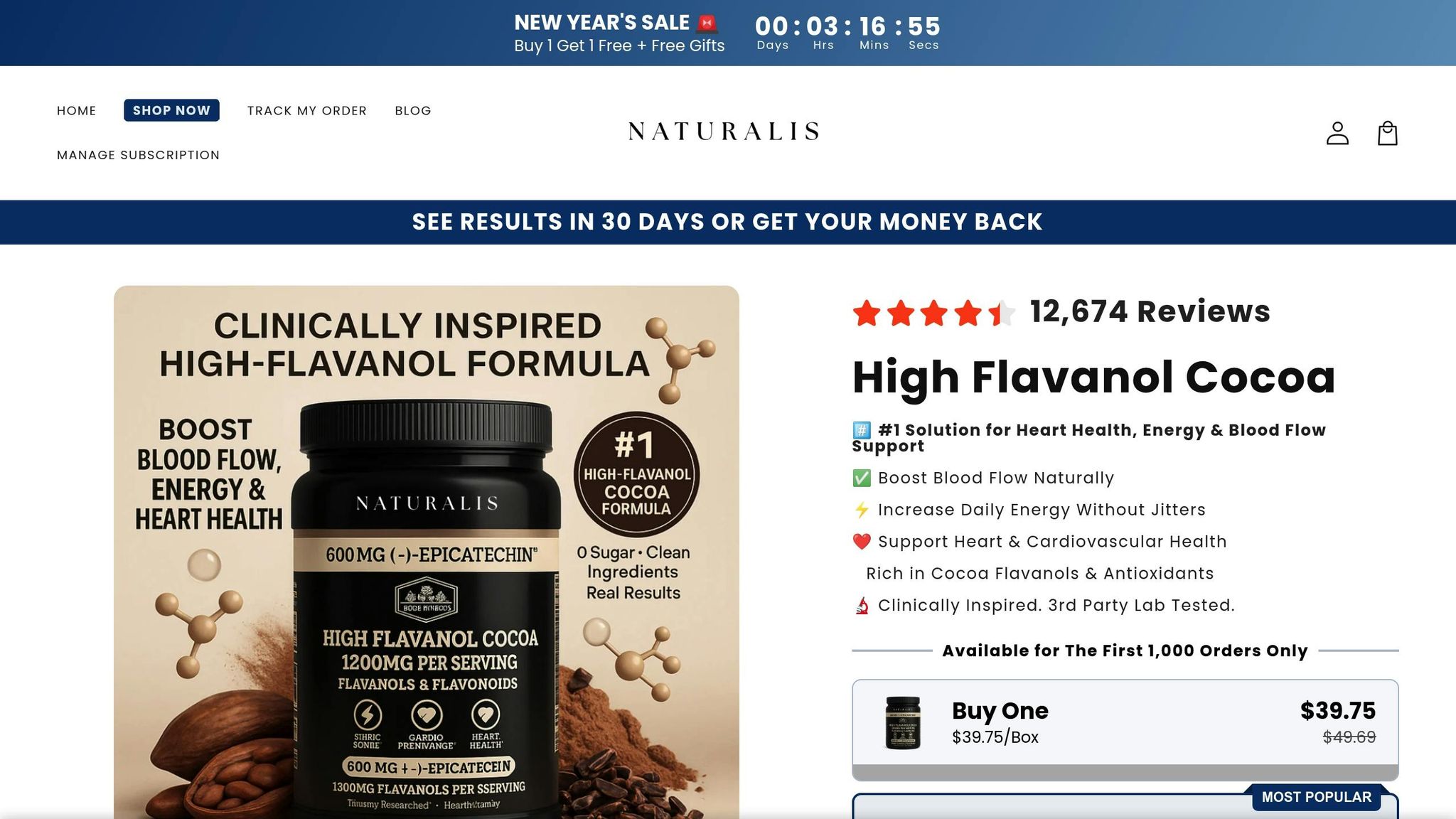
In addition to whole foods, improving circulation can also help sustain energy levels. Cocoa flavanols are known to boost nitric oxide levels, which relaxes arteries, enhances blood flow, and provides long-lasting energy without the jittery effects of caffeine.
A June 2015 study published in the British Journal of Nutrition by Sansone et al. revealed that consuming high-flavanol cocoa led to a 24% improvement in flow-mediated artery dilation within just two hours. When consumed daily for two weeks, participants experienced continued improvements in vascular flexibility. Clinical studies suggest that doses of 500mg to 1,000mg of cocoa flavanols per day are effective for these benefits.
Naturalis High Flavanol Cocoa is a convenient option for reaping these benefits. Unlike standard cocoa or chocolate, which often lose their beneficial flavanols during processing, this supplement preserves the active compounds your body needs. It’s sugar-free and priced at $49.69, offering a practical way to support better circulation and sustained energy without relying on sugar or caffeine. For the best results, use it daily, as consistent intake allows the circulatory benefits to build over time - typically within two weeks.
Drink More Water and Try Herbal Beverages
Prevent Fatigue by Staying Hydrated
Did you know that water makes up about 50% to 60% of your body weight? It’s essential for delivering nutrients to your cells and flushing out waste. When your body doesn’t get enough fluids, even these basic functions can falter, leaving you feeling drained. Fatigue is often one of the earliest signs of dehydration. Dr. Anna B. Shannahan, a Family Medicine Physician at Northwestern Medicine, emphasizes this point:
"Fatigue is a common sign of dehydration, so make sure you drink water throughout the day".
Even slight dehydration can make it harder to concentrate and sap your energy. To stay ahead of this, aim to drink about half your body weight in ounces of water each day. For instance, if you weigh 200 pounds, that’s roughly 100 ounces. Men should generally aim for around 15 cups (3.7 liters) of total fluids daily, which includes both drinks and food. Kickstart your morning with a glass of lemon water and a pinch of sea salt to restore electrolytes. Foods like cucumbers, celery, and melons - packed with water - are also great additions to your hydration routine.
Switch to Herbal Drinks
Once you’ve nailed your hydration habits, consider adding herbal beverages to the mix. These drinks not only keep you hydrated but can also give your energy levels a gentle boost without the caffeine jitters. Ginger tea, for instance, supports circulation and helps stabilize blood sugar levels, making it a great choice mid-morning or after meals. Peppermint tea, on the other hand, can enhance focus and improve oxygen flow to the brain, making it perfect for beating that afternoon slump.
If you’re missing the ritual of coffee but want to skip the caffeine, chicory root coffee is a fantastic alternative. Its roasted flavor closely mirrors traditional coffee, and it might even aid digestion. As Kelsey Costa, MS, RDN, explains:
"Chicory root, much like coffee beans, can be transformed into a hot beverage through roasting, grinding, and brewing, offering a similar experience to coffee without caffeine".
For a soothing option, try golden milk, also known as turmeric lattes. While it won’t deliver an instant energy spike, it may help improve sleep and provide steady energy throughout the day. Herbal drinks are praised for their satisfying, coffee-like flavors without the acidity. Swapping out your second or third cup of coffee for one of these herbal alternatives can help maintain your energy naturally while still indulging in comforting, flavorful beverages.
Increase Energy with Exercise and Sunlight
Do Quick Workouts Throughout the Day
Even a simple 10-minute walk or workout can give you a noticeable energy boost. Physical activity helps your body produce more mitochondria - those tiny power plants in your cells that generate energy from glucose and oxygen. Dr. Toni Golen, Editor in Chief of Harvard Women's Health Watch, explains it like this:
"Exertion spurs your body to produce more mitochondria inside your muscle cells. Mitochondria are known as the powerhouses of cells... Having more of them increases your body's energy supply."
Exercise also improves blood flow, delivering oxygen-rich blood to your heart, muscles, and brain. This not only keeps your body fueled but also triggers the release of dopamine and endorphins, which can elevate your mood and sharpen focus.
You can easily add micro-movements to your day. At your desk, try 10 "chair pushups" by gripping the arms of your chair and pushing your body upward. Take a brisk 10-minute walk outside to shake off the afternoon slump, or pace around while chatting on the phone. Yoga poses like the "Warrior Pose" (holding each leg for 5–10 seconds) or "Legs Up the Wall" (lying with your legs at a 90-degree angle for 3–5 minutes) can also refresh your energy without requiring much effort.
As Lori Chong, RDN, LD, from Ohio State Integrative Medicine points out:
"Once you get into the habit of exercising regularly, you will see that it boosts energy."
Pair your exercise routine with exposure to natural sunlight for an even greater energy lift.
Get 10-15 Minutes of Daily Sunlight
Sunlight plays a key role in boosting energy. It stimulates your body to produce Vitamin D, which is essential for cellular energy and overall health. In fact, a Vitamin D deficiency is often linked to chronic fatigue and a weakened immune system. Additionally, sunlight increases serotonin levels, which not only improves your mood but also helps regulate your sleep cycle.
Morning sunlight is especially beneficial. It helps align your circadian rhythm - your internal clock - leading to better sleep at night and more alertness during the day. A morning walk on a sunny day can also enhance your memory and improve your ability to learn and process new information. If mornings aren’t an option, even a quick 10-minute stroll outdoors in the late afternoon can recharge your energy and clear mental fog.
Aim for 10 to 15 minutes of sunlight daily to stimulate enough Vitamin D production, though some experts recommend up to 30 minutes for the full mood and energy benefits. Keep your exposure short and safe to protect your skin while reaping these natural benefits.
Use Adaptogens and Supplements for Consistent Energy
In addition to maintaining a balanced diet and regular exercise, certain supplements can help keep your energy levels steady throughout the day.
Consider Maca, Ginseng, or Rhodiola
Adaptogens are natural substances that help your body handle stress and maintain balance [33, 35]. Unlike caffeine, which can cause a quick burst of energy followed by a crash, adaptogens work by regulating the hypothalamic-pituitary-adrenal (HPA) axis. This system controls stress hormones like cortisol, helping your body gradually return to a more balanced state [33, 34].
Take Rhodiola rosea as an example. It’s known for reducing mental fatigue and improving focus by enhancing ATP production in your mitochondria - your cells’ energy centers. This creates a mental boost without the jittery side effects that often come with caffeine [33, 34]. Similarly, Siberian ginseng (Eleuthero) helps fight both physical and mental fatigue by promoting fat utilization and reducing lactic acid buildup during physical activity. For those dealing with hormonal changes, maca root can be particularly helpful, as it supports hormone balance and may alleviate symptoms associated with menopause.
For best results, take Rhodiola or Ginseng in the morning or before a workout for 6–12 weeks, then switch to a different adaptogen. Always consult with a healthcare provider before starting new supplements, especially if you’re on medication for conditions like diabetes, high blood pressure, or depression [34, 35].
To complement adaptogens, cocoa flavanols offer another way to support sustained energy by improving circulation.
Add Naturalis High Flavanol Cocoa to Your Routine
While adaptogens focus on stress management, a cocoa supplement like Naturalis High Flavanol Cocoa enhances energy by boosting blood flow. Cocoa flavanols promote better circulation, improving the delivery of oxygen and nutrients throughout your body. This results in what many describe as steady, reliable energy without the crash associated with stimulants.
You can easily incorporate this into your day by mixing it into a smoothie, stirring it into a warm drink, or even replacing your afternoon coffee with it. Beyond energy, cocoa’s polyphenols also help lower inflammation and support cardiovascular health, contributing to overall stamina and reduced fatigue. At $49.69, Naturalis High Flavanol Cocoa provides a simple and caffeine-free way to maintain energy levels throughout the day.
Improve Sleep and Reduce Stress
In the U.S., over a third of adults don’t get enough sleep. Among them, 14.5% struggle to fall asleep, while 17.8% have trouble staying asleep. This lack of rest is more than just an inconvenience - it’s during deep sleep that your body produces ATP, the molecule that fuels every cell. Without proper sleep, your energy reserves dwindle.
"Sleep specialists believe that the last stage, known as deep sleep or slow‑wave sleep, is the main time when your body renews and repairs itself."
– Harvard Health Publishing
Stress also takes a toll on your energy levels. According to Harvard Health Publishing, “Stress‑induced emotions consume huge amounts of energy”. When you’re constantly anxious or worried, your body shifts resources to handle these perceived threats, leaving you drained - even if you haven’t been physically active. Prioritizing restorative sleep and managing stress are essential steps to maintaining energy, complementing the nutritional and activity strategies discussed earlier.
Get 7–9 Hours of Quality Sleep
Adults generally need 7 to 9 hours of sleep per night to perform at their best. But it’s not just about how long you sleep - quality matters just as much. Start by creating an ideal sleep environment. Keep your bedroom cool (around 65°F to 68°F), block out light with blackout curtains, and use a white noise machine if outside sounds disturb you.
Establish a calming bedtime routine that doesn’t involve screens. Spend the hour before bed reading under soft lighting, taking a warm bath, or practicing progressive muscle relaxation. Devices like phones and laptops emit blue light, which disrupts melatonin production and delays your internal clock [45, 46].
Avoid stimulants like caffeine, heavy meals, alcohol, and nicotine close to bedtime [39, 5]. While alcohol might initially make you feel sleepy, it disrupts REM sleep and can lead to waking up in the middle of the night. Similarly, nicotine acts as a stimulant, making it harder to fall asleep.
Practice Stress Reduction Techniques
Reducing stress is just as important as improving sleep when it comes to sustaining energy. You don’t need hours to manage stress - small, consistent efforts can make a big difference. Techniques like deep breathing and mindfulness meditation can ease anxiety and sharpen focus [5, 6, 45]. Practices such as yoga, tai chi, and qi gong, which combine movement with controlled breathing, are also effective. In fact, 85% of adults report that yoga helps them manage stress.
To stay balanced throughout the day, try using the "Four P's" - prioritize, plan, pace, and maintain good posture. Kim Stuckart, an occupational therapist at Spaulding Rehabilitation Hospital, advises:
"Remember that slow and steady will win the daily race. Spread out your activity to give yourself time to recover in between tasks".
If your mind races at night, consider journaling before bed. Writing down your thoughts can help you organize them and reduce overthinking. And if you need a nap during the day, keep it short - 20 to 30 minutes - to avoid interfering with your nighttime sleep [39, 42].
Conclusion
Increasing energy levels without relying on caffeine involves combining several practical strategies. Start with a balanced diet rich in whole foods, including complex carbohydrates and lean proteins, to maintain stable blood sugar levels. Staying properly hydrated is equally important - research shows that even a 2% drop in hydration can impact energy levels. Adding brief walks to your routine can also improve oxygen flow and boost ATP production, your body's main energy source.
Natural supplements can also play a role. Adaptogens like Ginseng, Rhodiola, and Maca are known to help the body adapt to stress over time. Additionally, Naturalis High Flavanol Cocoa supports better circulation by increasing nitric oxide production, which helps deliver oxygen and nutrients more effectively. Clinical studies suggest that consuming 500mg to 1,000mg of cocoa flavanols daily can promote cardiovascular health.
Of course, energy isn’t just about what you eat or drink - it’s also about recovery. Prioritizing 7 to 9 hours of quality sleep each night gives your body the chance to restore its energy reserves. Meanwhile, managing stress through techniques like deep breathing or mindfulness can help you feel more energized throughout the day.
As Dr. Anthony Komaroff from Harvard Medical School wisely points out:
"The causes of your energy debts are also the solutions for refueling".
FAQs
What are some effective ways to boost energy without caffeine?
Boosting your energy without caffeine is all about supporting your body's natural rhythms with better sleep, proper hydration, balanced nutrition, regular exercise, and managing stress. Start by aiming for 7–9 hours of quality sleep each night and sticking to a consistent bedtime schedule - this helps regulate your energy throughout the day. Also, don't underestimate the power of water! Drinking about 64 ounces (or 8 cups) daily can ward off fatigue that often gets mistaken for low energy.
Fueling your body with the right foods is another key. A balanced mix of complex carbs, lean protein, and healthy fats keeps your energy steady. For quick snacks, try something like Greek yogurt topped with fresh berries or an apple paired with nut butter - these options help you avoid the dreaded sugar crash. And don’t forget to move! A brisk 30-minute walk or some light strength training can improve circulation, giving you a natural energy boost.
Finally, steer clear of energy zappers like alcohol and nicotine. Instead, focus on managing stress with simple techniques like deep breathing or stretching throughout the day. These small but consistent habits can help you feel more energized and focused, no caffeine required.
What are some caffeine-free foods that help maintain energy throughout the day?
If you want to keep your energy levels up without relying on caffeine, focus on foods rich in nutrients that provide a slow, steady energy release. Whole grains - like oatmeal and quinoa - are great options because they digest gradually, helping to stabilize blood sugar levels. Adding protein-rich foods like eggs, grilled chicken, Greek yogurt, or cottage cheese can also give you lasting energy throughout the day. Need a quick snack? Go for nuts (such as almonds or walnuts), bananas, or berries. These are packed with natural sugars, fiber, and essential nutrients to help you stay refreshed and alert.
How can adaptogens like Rhodiola and Ginseng naturally boost energy?
Adaptogens are plant-based herbs that work to balance your body’s stress response, helping you maintain consistent energy levels while combating fatigue. By aiding your body in managing both physical and mental stress, they can help you feel sharper and more energized throughout the day.
Rhodiola rosea plays a key role in regulating stress hormones like cortisol, which helps prevent the energy dips often triggered by stress. Beyond this, it’s known to boost stamina, enhance mental clarity, and improve endurance - all without the shaky side effects linked to caffeine.
Ginseng, especially Panax ginseng, increases energy by optimizing how your body uses glucose and generates ATP, the primary fuel for your cells. This can lead to better focus, improved physical performance, and an overall sense of vitality.
When combined, these adaptogens provide a natural, caffeine-free way to stay alert and energized, while also enhancing your body’s ability to handle stress.