


Not all cocoa is equal when it comes to health benefits. The difference lies in how cocoa is processed, which impacts its flavanol content - a group of compounds linked to heart health and improved blood flow. Here's the key takeaway: high-flavanol cocoa retains more flavanols due to minimal processing, while regular cocoa loses up to 90% of these compounds through alkalization and high-heat roasting.
Quick Overview:
- High-Flavanol Cocoa: Minimally processed, keeps flavanols intact. Offers more antioxidants and cardiovascular benefits.
- Regular Cocoa: Dutch-processed or roasted at high temperatures, resulting in lower flavanol levels and fewer health perks.
Why It Matters:
- High-flavanol cocoa supports heart health by boosting nitric oxide, improving blood flow, and lowering blood pressure.
- Regular cocoa is better for flavor but lacks the same health advantages.
If you're looking for health benefits, choose natural, non-alkalized cocoa labeled "high-flavanol." It provides more flavanols with fewer calories compared to regular cocoa. Details on processing methods, flavanol content, and health impacts are explored further in the article.
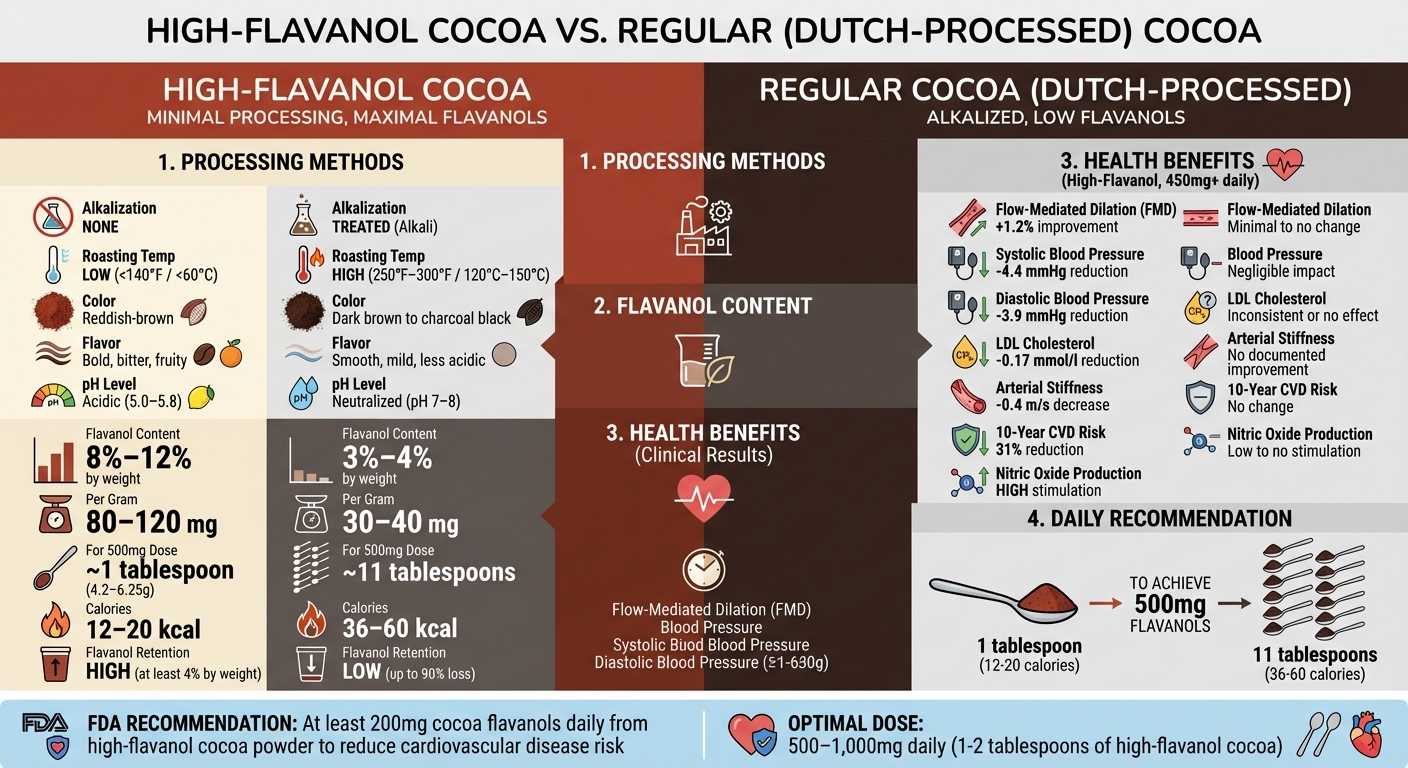
High-Flavanol vs Regular Cocoa: Processing, Flavanol Content, and Health Benefits Comparison
Should You Supplement With Cocoa Flavanols? - Rhonda Patrick
sbb-itb-e973f61
What Are Cocoa Flavanols?
Cocoa flavanols are natural compounds found in the seeds of the Theobroma cacao tree. These are part of a group called flavan-3-ols, with the primary ones being (-)-epicatechin, (+)-catechin, and procyanidins. They’re known for their strong antioxidant properties, thanks to their unique chemical makeup, which includes multiple hydroxyl groups that help neutralize harmful free radicals. Interestingly, cacao beans have the highest flavanol content of any food when measured by weight. For context, raw cocoa nibs typically contain 6–8 grams of phenolic compounds per 100 grams of dry weight.
The Science Behind Cocoa Flavanols
One of the standout benefits of cocoa flavanols is their ability to boost nitric oxide (NO) production in the body. This helps relax blood vessels, improving blood flow and supporting cardiovascular health - a major focus of research in this area.
"Cocoa flavanols help maintain the elasticity of blood vessels, which contributes to normal blood flow."
– European Food Safety Authority (EFSA)
Among the flavanols, (-)-epicatechin stands out as the most bioavailable, with absorption rates ranging from 22% to 55%. Clinical studies have demonstrated positive effects on cardiovascular and cognitive health with daily flavanol intake ranging between 45.3 mg and 1,078 mg. To support health claims related to reduced cardiovascular disease risk, the FDA mandates that high-flavanol cocoa powder must contain at least 4% naturally preserved cocoa flavanols. This underscores the importance of minimal processing to retain the natural benefits of cocoa.
How Regular Cocoa Differs
Regular cocoa, on the other hand, loses much of these bioactive benefits due to extensive processing. Dutch processing, which reduces acidity and bitterness, significantly diminishes the natural flavanol content.
"Alkalization has been found to result in the oxidation and polymerization of flavonoids, leading to a reduction in the astringency... greatest losses were observed for epicatechin and catechin (up to ca. 98 and 80%, respectively)."
– Luis Goya, Institute of Food Science, Technology and Nutrition
Additionally, high-heat roasting transforms (-)-epicatechin into (-)-catechin, a form that the body absorbs less effectively. As a result, standard cocoa powder contains only about 4 grams of phenolic compounds per 100 grams - far less than the 6–8 grams found in raw cocoa. This makes regular cocoa more of a flavor enhancer than a source of health benefits.
Processing Methods: High-Flavanol Cocoa vs Regular Cocoa
When it comes to cocoa, the way it’s processed plays a huge role in determining its nutritional value. While cocoa is often celebrated for its health benefits, the truth is, not all cocoa products are created equal. High-flavanol cocoa stands out because of how it’s processed, preserving the compounds that make it beneficial. On the other hand, regular cocoa often sacrifices these nutrients for flavor and convenience.
High-Flavanol Cocoa: Minimal Processing
High-flavanol cocoa is all about keeping things as natural as possible. It undergoes minimal processing to protect its flavanol content, which is responsible for its health-boosting properties. This means no alkalization and either no roasting or very gentle heat treatment, with temperatures kept below 140°F (60°C). Some manufacturers even go the extra mile by using cold-pressing techniques to extract cocoa butter, ensuring that antioxidants remain intact.
The result? A reddish-brown powder with a bold, bitter, or fruity flavor and a naturally acidic pH (5.0–5.8). These characteristics signal that the cocoa has retained its beneficial flavanols, which make up at least 4% of its weight. It’s not the sweetest or smoothest option, but it packs a punch when it comes to health benefits.
Regular Cocoa: Alkalization and Nutrient Loss
Regular cocoa takes a very different path. It typically undergoes Dutch processing, where the cocoa is treated with alkaline solutions like potassium or sodium bicarbonate. This process raises the pH to a neutral or slightly alkaline level (7–8), which gives the cocoa a smoother, milder taste and a darker color. However, this comes at a cost - up to 90% of the flavanols are lost in the process.
The roasting stage further diminishes its nutritional value. Regular cocoa is roasted at much higher temperatures, between 250°F and 300°F (120°C–150°C), which breaks down heat-sensitive compounds like polyphenols. What’s left is a product that’s perfect for baking but offers little in terms of health benefits. These processing methods strip away much of the cardiovascular and antioxidant advantages associated with cocoa.
Processing Comparison Table
Here’s a quick look at how the two types of cocoa stack up when it comes to processing and nutritional value:
| Feature | High-Flavanol Cocoa | Regular (Dutch-Processed) Cocoa |
|---|---|---|
| Alkalization | None | Treated with alkali (e.g., potassium/sodium bicarbonate) |
| Roasting Temperature | Minimal or low (<140°F / <60°C) | High (250°F–300°F / 120°C–150°C) |
| Flavanol Retention | High (at least 4% by weight) | Low (up to 90% loss) |
| Color | Reddish-brown | Dark brown to charcoal black |
| Flavor | Bold, bitter, fruity, wine-like | Smooth, mild, less acidic |
| pH Level | Acidic (approx. 5.0–5.8) | Neutralized (pH 7–8) |
This comparison highlights how the choices made during processing can dramatically alter cocoa’s flavor, appearance, and most importantly, its health benefits.
Flavanol Content and Dosage
Flavanol Levels in High-Flavanol vs Regular Cocoa
High-flavanol cocoa stands out with a flavanol content of 8% to 12% by weight, translating to about 80 to 120 mg per gram. Regular cocoa, on the other hand, retains only 3% to 4% flavanols, or roughly 30 to 40 mg per gram, due to processing methods that strip away these delicate compounds. The situation is even more pronounced with Dutched (alkalized) cocoa, where flavanol content can drop below 2% (less than 20 mg per gram). A 2025 ConsumerLab review highlighted this variability, showing that flavanol levels in cocoa powders can range anywhere from 10 mg to over 500 mg in just a 5-gram serving, largely depending on how the cocoa was processed. This demonstrates how processing methods directly influence the nutritional value of cocoa.
Meeting Daily Flavanol Requirements
For cardiovascular benefits, the Academy of Nutrition & Dietetics advises a daily flavanol intake of 400 to 600 mg. Similarly, the FDA suggests that consuming at least 200 mg of flavanols daily from high-flavanol cocoa powder may help lower the risk of cardiovascular disease.
To get a 500 mg dose of flavanols, you would need about 4 to 6 grams (approximately 1 tablespoon) of high-flavanol cocoa. In comparison, achieving the same dose using regular baking cocoa would require nearly 11 tablespoons, which significantly increases calorie consumption. This stark contrast highlights the efficiency of high-flavanol cocoa for meeting daily flavanol needs without the added caloric burden.
Flavanol Content Comparison Table
| Cocoa Type | Flavanol Content (%) | Flavanols per Gram | Amount for 500 mg Dose | Estimated Calories |
|---|---|---|---|---|
| High-Flavanol Cocoa | 8% – 12% | 80 – 120 mg | ~4.2 – 6.25 g (≈1 tbsp) | 12 – 20 kcal |
| Regular Cocoa | 3% – 4% | 30 – 40 mg | ≈11 tbsp | 36 – 60 kcal |
| Dutched (Alkalized) | <2% | <20 mg | >25 g (≈5+ tbsp) | >100 kcal |
The calorie difference is worth noting: relying on regular or Dutched cocoa to meet your daily flavanol requirement means consuming far more calories compared to the more concentrated high-flavanol alternatives. This makes high-flavanol cocoa not only a more efficient choice but also a smarter one for maintaining a balanced diet.
Health Benefits: Cocoa Flavanols vs Regular Cocoa
Cardiovascular Benefits of Cocoa Flavanols
Cocoa rich in flavanols can do wonders for your cardiovascular system. It boosts nitric oxide production, which helps your blood vessels relax and widen - a process called vasodilation. This improved blood flow ensures oxygen and nutrients reach your cells more efficiently, supporting overall heart health.
Take the Flaviola Health Study conducted at Duesseldorf University (Feb 2013–Aug 2014) as an example. In this study, 100 healthy middle-aged adults consumed 450 mg of cocoa flavanols twice daily for a month. The results? A 1.2% improvement in flow-mediated dilation (FMD), a measure of blood vessel health, and a 31% reduction in their 10-year heart attack risk. On top of that, participants saw their systolic blood pressure drop by 4.4 mmHg and diastolic pressure by 3.9 mmHg. There were also improvements in cholesterol levels, with LDL decreasing by 0.17 mmol/l and HDL increasing by 0.10 mmol/l, alongside a 0.4 m/s reduction in arterial stiffness.
The COSMOS Study (2016–2021) took things even further, tracking over 21,000 healthy adults for five years. Those who consumed 500 mg of cocoa flavanols daily showed a 39% improvement in key heart health markers compared to a placebo group. Even better, the benefits of cocoa flavanols kick in quickly - vascular function and blood flow can improve within just two hours of consumption.
Limited Health Effects of Regular Cocoa
Regular cocoa, on the other hand, doesn’t pack the same punch. Its flavanol content is significantly reduced during processing, which means it offers only minimal cardiovascular benefits. To match the therapeutic dose of 900 mg of flavanols used in clinical studies, you’d need to eat anywhere from 100 to 500 grams of regular chocolate daily. That’s not exactly practical - and it would come with thousands of extra calories.
The FDA has weighed in, recommending at least 200 mg of cocoa flavanols daily from high-flavanol cocoa powder to help reduce the risk of cardiovascular disease. Unfortunately, regular cocoa rarely contains enough flavanols to meet this threshold.
Health Outcomes Comparison Table
The stark difference in flavanol content between high-flavanol cocoa and regular cocoa explains their contrasting effects on heart health. Here’s how they stack up:
| Health Outcome | High-Flavanol Cocoa (450 mg+ CF) | Regular/Alkalized Cocoa |
|---|---|---|
| Endothelial Function (FMD) | Significant increase (~1.2%) | Minimal to no significant change |
| Systolic Blood Pressure | Reduction of 4.4 mmHg or more | Negligible impact due to low flavanol dose |
| Arterial Stiffness (PWV) | Decreased by ~0.4 m/s | No documented improvement |
| LDL Cholesterol | Significant reduction (~0.17 mmol/l) | Inconsistent or no effect |
| Nitric Oxide Production | High stimulation of NO synthase | Low to no stimulation |
| 10-Year CVD Risk Score | Significant reduction (up to 31%) | No change |
How to Use Cocoa Flavanols Daily
Choosing High-Flavanol Cocoa Products
Incorporating high-flavanol cocoa into your daily routine is an easy way to support heart health. The key is choosing products that retain their natural flavanol content, which means avoiding anything heavily processed. Specifically, steer clear of cocoa labeled as "Dutch-processed" or "alkalized." These terms indicate the product has been treated with alkali, which reduces its flavanol levels. Instead, look for labels that say "non-alkalized", "natural", or "high-flavanol".
For the best results, opt for products that clearly list their flavanol content, typically ranging from 7.5% to 12.6%. For instance, a single tablespoon of high-flavanol cocoa powder can provide around 630 mg of cocoa flavanols. Choosing products with lab-verified potency and minimal additives - like those highlighted on the Naturalis blog - ensures you're getting pure cocoa without artificial flavors, unnecessary extracts, or added sugars.
Once you've selected a high-quality cocoa product, the next step is figuring out how to incorporate it into your daily meals.
Adding High-Flavanol Cocoa to Your Diet
To enjoy the heart-health benefits of cocoa flavanols, aim to consume 1–2 tablespoons daily. This can be as simple as mixing the powder into your morning smoothie, stirring it into oatmeal, blending it with yogurt, or adding it to your coffee for an energizing start to the day. Since cocoa contains mild stimulants, it's best to consume it earlier in the day.
Keep in mind that high heat can diminish flavanol levels. Allow hot liquids to cool to about 175°F (80°C) before adding cocoa. If you're baking, try using lower temperatures or opt for no-bake recipes like energy balls, protein bars, or chocolate chia pudding. Pairing cocoa with healthy fats or fiber - such as almond butter in a smoothie or nuts in your oatmeal - can further enhance its benefits.
With consistent daily use, you can start noticing heart-health improvements within two weeks, and some effects may even be felt as soon as two hours after consumption.
Conclusion
The way cocoa is processed plays a major role in the flavanol content it retains. Regular cocoa often undergoes alkalization and high-heat roasting, processes that significantly strip away its natural flavanols. On the other hand, high-flavanol cocoa is carefully processed to preserve bioactive compounds like (-)-epicatechin, which the body absorbs at rates ranging from 22% to 55%.
These differences aren't just technical - they translate into measurable health benefits. For instance, consuming 450 mg of cocoa flavanols daily for a month has been shown to lower systolic blood pressure by 4.4 mmHg, reduce diastolic blood pressure by 3.9 mmHg, and improve flow-mediated vasodilation by 1.2%. Regular cocoa, with its diminished flavanol levels, simply doesn’t deliver these cardiovascular perks.
"Dietary flavanols have the potential to maintain cardiovascular health even in low‐risk subjects." – Roberto Sansone et al., British Journal of Nutrition
To experience these benefits, selecting the right product is key. Clinical research suggests that 500–1,000 mg of cocoa flavanols daily can improve cardiovascular health - a goal you can meet with just 1–2 tablespoons of high-flavanol cocoa. Look for products labeled as "natural", "non-alkalized", or "high-flavanol", and steer clear of those marked "Dutch-processed". Add this cocoa to your morning oatmeal or smoothies, but stick to moderate temperatures to avoid degrading the flavanols. With regular use, you might notice cardiovascular benefits as early as two weeks in.
These findings emphasize why choosing high-flavanol cocoa is a smart move for supporting heart health, building on the earlier points explored.
FAQs
What makes high-flavanol cocoa healthier than regular cocoa?
High-flavanol cocoa stands out because it’s rich in flavanols, natural compounds celebrated for their potent antioxidant effects. While regular cocoa loses much of its flavanol content during heavy processing, high-flavanol cocoa undergoes minimal processing to retain these nutrients. This preservation plays a key role in promoting cardiovascular health by improving blood circulation, helping to lower blood pressure, and decreasing the likelihood of heart-related issues.
Research also points to high-flavanol cocoa's potential to support brain health, particularly in older adults. It has been shown to improve memory and cognitive function, thanks to its ability to enhance blood flow. By benefiting both the heart and the brain, high-flavanol cocoa offers a well-rounded option for those looking to prioritize their overall health compared to traditional cocoa products.
How does cocoa processing impact its flavanol content?
The way cocoa is processed plays a big role in how much flavanol it retains. Flavanols, like epicatechin and catechin, are natural compounds found in cocoa that are linked to health benefits. However, during early steps like fermentation and drying, heat and microbial activity start to break these down. Roasting, which gives cocoa its rich flavor, takes things further by reducing flavanol levels even more due to the high temperatures. On top of that, alkalization (also known as Dutch processing) strips away even more of these beneficial compounds.
Cocoa that’s minimally processed - dried at lower temperatures, lightly roasted, and left unalkalized - keeps much more of its flavanols intact. This makes it a better option for those looking to support heart health and maintain natural energy levels. Every stage of processing impacts the nutritional value of cocoa, so how it's handled really matters.
What should I consider when choosing cocoa products high in flavanols?
When choosing cocoa products rich in flavanols, it’s important to consider both the flavanol content and how the cocoa has been processed. Look for products that clearly state their flavanol levels - typically between 7–12% - and opt for those labeled as unsweetened, non-alkalized, and minimally processed. Steer clear of cocoa that’s been alkalized (also known as Dutch-processed) or subjected to high-heat roasting, as these methods can significantly reduce the flavanol content.
High-quality cocoa often emphasizes details like bean origin and sourcing practices. Products sourced from premium farms and carefully dried to preserve nutrients are a good sign of quality. Some may even feature an FDA-qualified health claim, which indicates adherence to rigorous scientific standards and highlights potential cardiovascular benefits. To get the most value, compare the price per ounce - for example, premium cocoa powders might cost around $40 for a 12-ounce bag - and ensure the packaging clearly lists the flavanol percentage.