


Your heart beats around 100,000 times daily, pumping blood through 60,000 miles of vessels. The good news? Over 80% of heart issues are preventable with simple, daily habits. Here’s how you can support your heart:
- Eat smarter: Add fiber-rich foods, healthy fats, leafy greens, and cocoa flavanols while cutting back on processed foods and sodium.
- Stay active: Aim for 150 minutes of moderate aerobic exercise weekly, plus strength training twice a week.
- Prioritize sleep: Get 7–9 hours nightly and maintain a consistent schedule.
- Manage stress: Practice mindfulness, take breaks, and spend time outdoors.
- Avoid tobacco and limit alcohol: Quit smoking entirely and drink alcohol in moderation.
- Track your health numbers: Regularly check blood pressure, cholesterol, blood sugar, and BMI.
Small, consistent changes - like walking daily, eating whole foods, and getting quality rest - can greatly reduce your risk of heart disease. Adding cocoa flavanols, like those in Naturalis High Flavanol Cocoa, can further support circulation and vascular health. Start with one or two habits today to protect your heart for the long term.
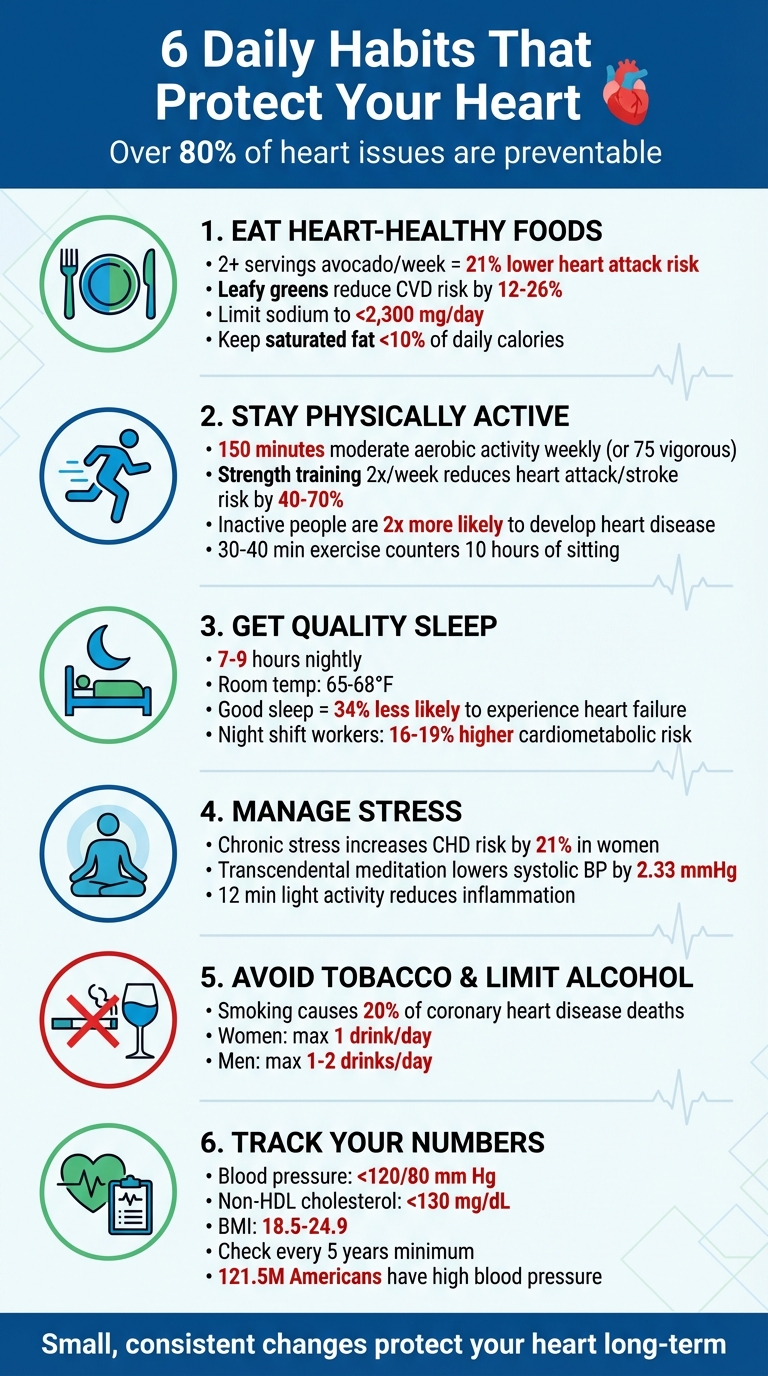
6 Daily Heart Health Habits with Key Statistics
Eight Simple Steps for a Heart-Healthy Lifestyle
1. Eat Heart-Healthy Foods Daily
What you eat plays a huge role in how well your heart functions. The American Heart Association says it best: "A healthy diet and lifestyle are the keys to preventing and managing cardiovascular disease". Even small changes in your food choices can make a big difference. Here are some ways to make your diet more heart-friendly.
Build a Balanced Diet
Focus on eating a variety of foods packed with nutrients. Fiber-rich options like oats, beans, lentils, and quinoa help lower LDL cholesterol and keep blood sugar in check. Healthy fats from olive oil, avocados, nuts, and seeds can improve cholesterol levels, while oily fish like salmon, mackerel, and sardines provide omega-3s - try to have these at least twice a week. Leafy greens such as spinach and kale are rich in nitrates, which help relax blood vessels, reducing the risk of heart disease. For instance, eating two or more servings of avocado weekly has been linked to a 21% lower risk of heart attacks. Similarly, leafy greens can cut the risk of cardiovascular disease by 12% to 26%.
Cut Back on Processed Foods
Processed foods often come loaded with hidden sodium, added sugars, and unhealthy fats. To protect your heart, aim for less than 2,300 mg of sodium a day, and keep saturated fats under 10% of your daily calorie intake. Make simple swaps, like choosing whole-wheat bread or brown rice instead of white bread and white rice. Replace butter or lard with olive or canola oil, and opt for whole-food snacks instead of chips. When grocery shopping, look for the American Heart Association's "Heart-Check" mark to quickly spot heart-healthy products. You can also season your meals with herbs and spices like cilantro, garlic, oregano, or cumin instead of salt. For an extra boost, consider incorporating cocoa flavanols into your routine.
Add Cocoa Flavanols to Your Diet
Cocoa flavanols are natural compounds that support heart health by improving blood pressure, insulin resistance, and vascular function. According to research:
"Cocoa might be an important mediator... research demonstrates a beneficial effect of cocoa on blood pressure, insulin resistance, and vascular and platelet function." – PubMed, National Library of Medicine
Dark chocolate with 70% to 85% cacao contains two to three times more flavanols than milk chocolate. A single ounce of 70–85% dark chocolate has about 170 calories and 6.8 grams of sugar. If you want a more focused option, Naturalis High Flavanol Cocoa offers a sugar-free supplement designed to promote circulation and heart health, delivering these benefits without adding extra calories.
2. Stay Physically Active
Keeping your body moving isn’t just about staying in shape - it’s also a major boost for your heart. Dr. Danine Fruge, Medical Director at the Pritikin Longevity Center, explains:
"With regular exercise, your muscles improve their ability to use oxygen in the blood so your heart doesn't have to pump as much blood."
Staying active can lower your blood pressure, improve cholesterol levels, and help you maintain a healthy weight. The stats back this up: people who don’t exercise are nearly twice as likely to develop heart disease compared to those who do. And here’s the best part: you don’t need to train for a marathon to see results. Let’s explore simple ways to make physical activity a regular part of your life.
Aim for 150 Minutes of Aerobic Activity Each Week
The American Heart Association suggests getting at least 150 minutes of moderate-intensity aerobic exercise or 75 minutes of vigorous activity every week. That works out to about 22 minutes a day or 30 minutes, five days a week.
Moderate activities include brisk walking, water aerobics, dancing, or leisurely cycling. For those who prefer a more intense workout, vigorous activities like running, swimming laps, jumping rope, or hiking uphill pack the same punch in half the time.
Don’t have large chunks of time? No problem. Even short bursts of 5–10 minutes add up. Park farther from the store, take the stairs, or squeeze in a quick walk during lunch. Household chores like gardening, raking leaves, or shoveling snow can also count toward your goal.
| Activity Type | Moderate Intensity Examples | Vigorous Intensity Examples |
|---|---|---|
| Walking/Running | Brisk walking (2.5+ mph) | Running or jogging (5+ mph) |
| Cycling | Slower than 10 mph | Faster than 10 mph or uphill |
| Swimming | Casual/light pace | Swimming laps at a fast pace |
| Household | Gardening, raking, mowing | Heavy yardwork (digging, shoveling) |
| Sports | Doubles tennis, ballroom dancing | Singles tennis, jumping rope, HIIT |
Strength Training Twice a Week
Adding strength training to your routine can amplify cardiovascular benefits. Resistance exercises help reduce body fat, improve cholesterol, and boost your metabolism. Research shows that even less than an hour of strength training per week can slash your risk of heart attack or stroke by 40% to 70%. Pair that with aerobic exercise, and you could reduce your overall risk of death by 40%.
You don’t need to invest in fancy equipment to get started. Free weights, resistance bands, or even body-weight exercises like push-ups, squats, and lunges are all effective. Aim for two sessions a week, focusing on major muscle groups. As Kerry J. Stewart, Ed.D., an exercise physiologist at Johns Hopkins Medicine, puts it:
"Aerobic exercise and resistance training are the most important for heart health."
Move More, Sit Less
Sitting for long periods can increase your risk of heart disease, diabetes, and even early death - even if you’re otherwise active. Research involving over 44,000 middle-aged adults found that 30 to 40 minutes of moderate-to-vigorous exercise can help counteract the risks associated with sitting for 10 hours a day.
For older adults, the benefits are just as clear. A study of women aged 72–85 found that more than 5.6 hours of light physical activity (like running errands or doing household tasks) daily reduced the risk of a heart attack or death from heart disease by 42% and lowered the chance of stroke by 22%.
Make it a habit to stand, stretch, or take a short walk every hour. These small actions add up. Dr. Jerome Fleg, a cardiologist and medical officer at the NHLBI, explains:
"Just getting out and doing some type of physical activity, even if it's not a high-intensity activity is beneficial."
3. Get Quality Sleep
Sleep isn't just about feeling rested; it's when your body gets to work on vital repairs. During sleep, your body heals cells, tissues, and blood vessels. It also plays a key role in regulating blood pressure, blood sugar, and cholesterol - three major players in heart health.
Recognizing its importance, the American Heart Association recently added sleep duration as the eighth pillar of cardiovascular health, ranking it alongside diet and exercise. As Donald M. Lloyd-Jones, M.D., President of the American Heart Association, puts it:
"Sleep duration is now considered an essential component for ideal heart and brain health."
Yet, about one in three adults in the U.S. don’t get enough sleep. This lack of rest has been linked to higher risks of obesity, Type 2 diabetes, and heart disease. A study led by Dr. Yongping Bai, analyzing data from 36,939 participants in the UK Biobank, found that shift workers with high blood pressure who frequently worked night shifts had a 16% higher risk of developing diabetes, heart disease, or stroke compared to daytime workers. Those working more than 10 night shifts per month faced a 19% higher risk of additional cardiometabolic conditions.
On the brighter side, good sleep can significantly protect your heart. A study of 400,000 adults by the National Heart, Lung, and Blood Institute (NHLBI) revealed that participants without excessive daytime sleepiness were 34% less likely to experience heart failure compared to those with poor sleep quality. Dr. Marishka Brown, Director of NHLBI's National Center on Sleep Disorder Research, emphasizes:
"Sleep health means not only are you getting enough sleep, but the quality of sleep that you're getting is consolidated and refreshing."
Keep a Consistent Sleep Schedule
Your body operates on an internal clock, known as the circadian rhythm, which thrives on consistency. Sticking to a regular sleep schedule - even on weekends - helps you fall asleep more easily and wake up feeling refreshed.
Set a bedtime alarm to remind yourself to wind down. To determine your bedtime, count back 7-9 hours from your wake-up time and stick to it daily. Over time, your brain will adapt to this routine, making sleep feel more natural.
Another simple trick? Get some morning light. Step outside or sit by a window soon after waking up. Exposure to natural light helps reset your internal clock and reinforces your sleep-wake cycle. Once your schedule is in place, focus on creating an environment that promotes better rest.
Set Up Your Bedroom for Better Sleep
Think of your bedroom as your personal retreat for rest. Small changes can make a big difference in how well you sleep and how your heart recovers overnight.
- Keep it cool. A room temperature between 65°F and 68°F helps your body naturally cool down for deeper sleep.
- Make it dark. Use blackout curtains to block light, as even small amounts of light can disrupt melatonin production. Dimming lights 30-60 minutes before bed can also ease the transition to sleep.
- Eliminate noise. If noise is an issue, try a white noise machine or add sound-absorbing items like heavy curtains. Sudden noises can disturb your sleep and even spike blood pressure.
- Remove screens. Blue light from screens suppresses melatonin and keeps your brain alert. Keep TVs, phones, and computers out of the bedroom. Consider putting your phone on "do not disturb" or leaving it in another room altogether.
| Adjustment | Recommendation | Why It Matters |
|---|---|---|
| Temperature | 65°F–68°F | Encourages deeper, uninterrupted sleep cycles |
| Lighting | Blackout shades; dim lights | Supports melatonin production for better rest |
| Electronics | Remove screens | Reduces blue light exposure and mental stimulation |
| Noise | White noise or soundproofing | Prevents sudden wake-ups and improves sleep depth |
Aim for 7-9 Hours Each Night
Adults need 7 to 9 hours of sleep per night to maintain optimal heart health. It’s not just about hitting a number; your body needs enough time to cycle through all five stages of sleep, including deep REM sleep, which is crucial for tissue repair and memory consolidation.
To set yourself up for success, avoid caffeine, alcohol, and heavy meals at least four hours before bed. Instead, wind down with relaxing activities like reading a physical book, meditating, or taking a warm bath.
As the Cleveland Clinic explains:
"Blood pressure naturally dips when we sleep - and that dipping is crucial for a healthy heart."
When you don’t get enough rest, this natural dip is disrupted, putting extra strain on your cardiovascular system.
4. Manage Your Stress
Taking care of your heart isn’t just about eating right and staying active - managing stress is just as crucial. Chronic stress can raise your blood pressure, increase your heart rate, and even cause inflammation in your blood vessels. Over time, this can lead to a higher risk of strokes and heart attacks.
For women, the stakes are especially high. Persistent stress increases the risk of coronary heart disease (CHD) by 21%, and major stressful events can raise the risk by another 12%. Stress doesn't just harm your heart directly; it often leads to unhealthy habits like smoking, heavy drinking, and poor eating, which can make things worse.
The good news? Managing stress can significantly lower these risks. Dr. Sharonne N. Hayes, founder of the Women's Heart Clinic at Mayo Clinic, puts it simply:
"Making healthy lifestyle changes can do a lot to help prevent or slow the progression of heart disease".
Incorporating daily stress-relief practices can make a big difference.
Use Relaxation Techniques Daily
Even small relaxation techniques can have a noticeable impact on your stress levels - and your heart. Practices like mindfulness (focused breathing or guided meditation) are proven to reduce stress perception. For a more structured option, transcendental meditation has shown impressive results, lowering systolic blood pressure by an average of 2.33 mmHg compared to other stress-management methods.
Start small: dedicate 5–10 minutes each day to relaxation. Find a quiet space, close your eyes, and focus on your breath. Try inhaling for four counts, holding for four, and exhaling for four. If meditation feels too formal, explore alternatives like gentle yoga, deep breathing exercises, or even reading a book before bed to unwind. Adding outdoor breaks to your routine can further amplify these benefits.
Take Breaks and Get Outside
Stepping away from your daily grind - even for a few minutes - can do wonders for your heart. Short breaks, especially outdoors, allow your cardiovascular system to recover from stress. Morning sunlight is particularly beneficial, as it helps regulate your internal clock, improving sleep and overall heart health.
A simple walk during your break can go a long way. Just 12 minutes of light cycling, for example, can activate heart-friendly compounds that reduce inflammation. If stepping outside isn’t an option, sitting by a window to soak in natural light can still help. On weekends, focus on activities that genuinely relax you, whether it’s gardening, listening to music, or catching up with loved ones. A strong social support network not only helps you handle stress better but also provides long-term protection for your heart.
sbb-itb-e973f61
5. Avoid Tobacco and Limit Alcohol
Taking control of your heart health starts with avoiding tobacco and keeping alcohol consumption in check. Both of these habits can harm your cardiovascular system, but the good news is that they're within your power to manage.
Let’s dive into the impact of tobacco first, followed by alcohol.
Stop Smoking
"Smoking is the No. 1 heart-disease risk factor that you can control", says Dr. Michael Blaha, a cardiologist at Johns Hopkins.
Cigarette smoking is responsible for about 20% of all deaths caused by coronary heart disease. Tobacco smoke is packed with over 9,000 chemicals, many of which contribute to heart problems through oxidative stress and inflammation. Even a single cigarette can spike blood pressure and stiffen arteries - this effect is seen even in teenagers. The damage starts immediately, so cutting back isn’t enough. Quitting completely is the only way to protect your heart.
The rewards of quitting are profound. It’s the most effective way to reduce oxidative stress, lower harmful oxidized LDL levels, and improve overall vascular health. Studies show that quitting smoking can restore blood vessel function and improve circulation. To make the process more manageable, set a quit date, tell your friends and family for support, and try healthy alternatives like deep breathing exercises or physical activity to cope with stress.
Once you've eliminated tobacco, the next step is to address alcohol consumption.
Drink Alcohol in Moderation
Drinking too much alcohol can lead to serious heart issues like high blood pressure, heart failure, and stroke. It may also result in cardiomyopathy, a condition that weakens or deforms the heart muscle. If you choose to drink, moderation is crucial: for women, this means up to one drink per day, and for men, one to two drinks per day. A standard drink equals 12 ounces of beer, 4 ounces of wine, or 1.5 ounces of 80-proof spirits. However, if you have heart failure or irregular heart rhythms, it’s best to avoid alcohol altogether.
Instead of relying on red wine for antioxidants, consider healthier options like fruits, vegetables, or grape juice.
6. Track Your Health Numbers
Keeping an eye on your health metrics is a smart way to stay on top of your heart health. Regular monitoring not only complements your daily habits but also helps you uncover potential risks that might otherwise go unnoticed. Many heart-related issues, like high blood pressure, can creep up silently without any symptoms, making routine checks essential.
"Watch your numbers and take action. It's motivating. It works."
- Seth Martin, M.D., M.H.S., Johns Hopkins cardiologist
The American Heart Association advises checking key metrics - cholesterol, blood sugar, blood pressure, and BMI - at least every five years to get a full picture of your cardiovascular health. In the U.S., the statistics are concerning: around 121.5 million people have high blood pressure, nearly 100 million are affected by obesity, and over 28 million live with Type 2 diabetes. Here’s how to keep tabs on the most critical indicators, like blood pressure, cholesterol, and BMI.
Check Blood Pressure and Cholesterol Regularly
Blood pressure checks should be part of every visit to your doctor. Ideally, your reading should be below 120/80 mm Hg. If your numbers are higher, talk to your healthcare provider about whether home monitoring between visits might be beneficial.
"It's important to remember that all of these numbers fall on a continuous scale. It's not enough to say you have high or low blood pressure - your doctor is looking at how high or how [low]."
- Michael Blaha, M.D., M.P.H., Johns Hopkins cardiologist
When it comes to cholesterol, focus on non-HDL cholesterol (total cholesterol minus HDL). This metric is often preferred because it doesn’t require fasting and provides a reliable snapshot of your heart health. A good target is under 130 mg/dL, though high-risk individuals might aim for a range of 70–100 mg/dL.
Watch Your Weight and Blood Sugar
Beyond blood pressure and cholesterol, keeping tabs on your weight and blood sugar is equally important. Your Body Mass Index (BMI) offers a quick estimate of body fat. A BMI in the range of 18.5–24.9 is linked to better cardiovascular health. Higher BMI levels can increase your chances of developing heart disease, high blood pressure, and Type 2 diabetes. Use online calculators to check your BMI regularly.
Blood sugar is another key metric to monitor. Persistent high blood sugar levels can quietly damage vital organs. Consider asking your doctor about hemoglobin A1c testing, which provides a clearer picture of your long-term blood sugar control compared to a single glucose reading. If you have diabetes or prediabetes, your healthcare provider can guide you on how often to check your glucose levels.
7. Add Naturalis High Flavanol Cocoa to Your Daily Routine
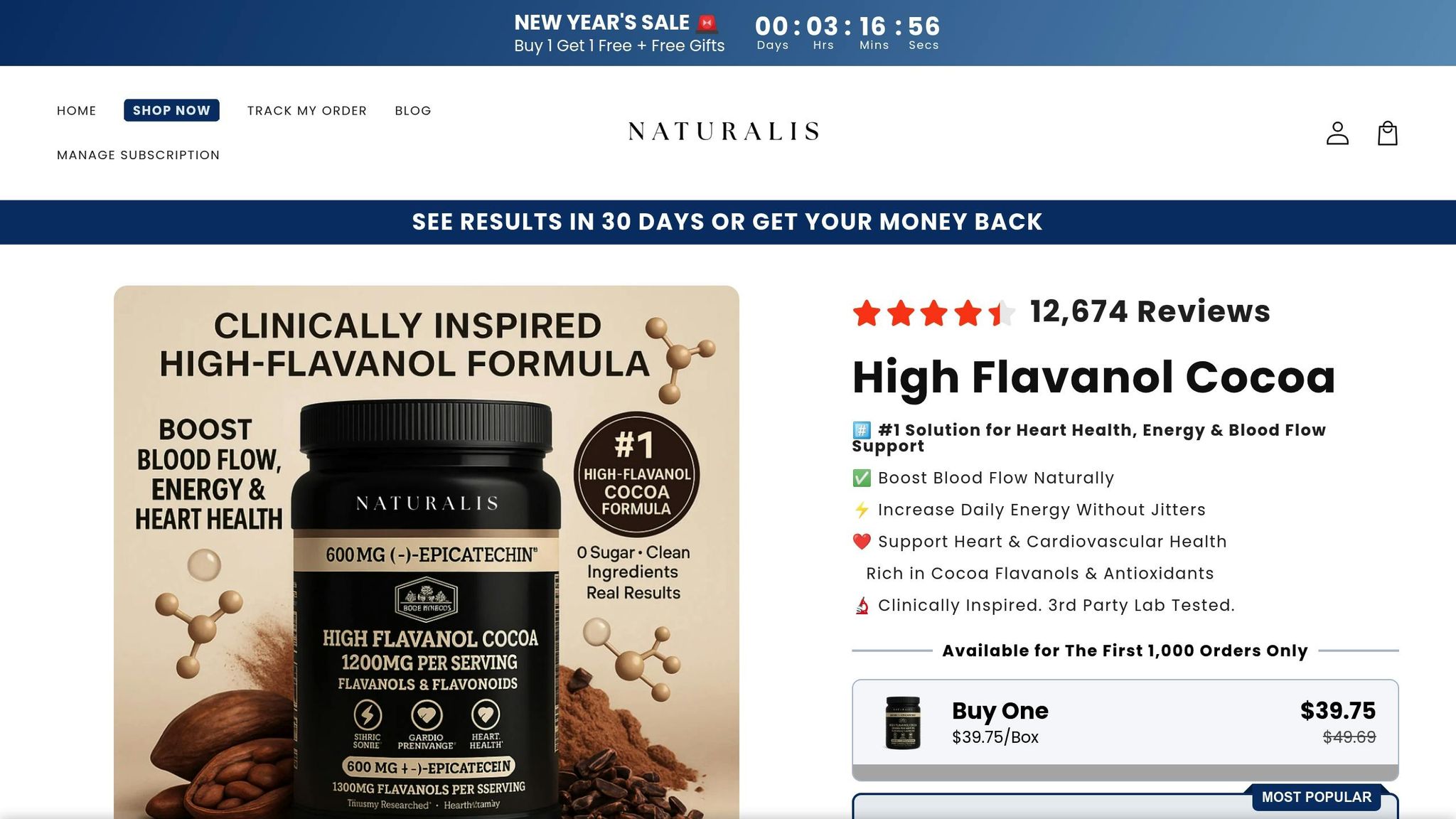
Naturalis has created a concentrated high-flavanol cocoa supplement designed to support heart health and overall circulation. By incorporating this into your daily routine, you can tap into the cardiovascular benefits of cocoa flavanols in a convenient and effective way.
Naturalis High Flavanol Cocoa ($49.69) is a sugar-free option that helps improve circulation, boost energy levels, and support heart function. Unlike typical cocoa products, this supplement is specially formulated to preserve flavanols, which play a key role in promoting nitric oxide production - a compound essential for healthy blood flow and vascular function. This makes it an excellent addition to a heart-conscious diet, delivering the benefits of flavanols in a concentrated form.
"Cocoa flavanols have both a short-term benefit that peaks in hours and a longer-term benefit that builds with daily consumption over the course of approximately two weeks." - FlavaNaturals
The science backs it up. Studies reveal that a single dose can increase flow-mediated dilation by 24% within two hours, while consistent use over six weeks significantly improves arterial blood flow. Most clinical trials suggest daily doses of 500 mg to 1,000 mg of cocoa flavanols for optimal heart and metabolic health.
Adding Naturalis High Flavanol Cocoa to your routine is simple and versatile. Start with 1–2 tablespoons per day and mix it into warm milk, plant-based alternatives, smoothies, oatmeal, or yogurt. If you're sensitive to natural stimulants, try consuming it earlier in the day. These easy methods make it simple to incorporate into your meals while enhancing your cardiovascular support.
To preserve the benefits, avoid exposing the cocoa to excessive heat, as high temperatures can break down the flavanols. Opt for no-bake recipes like chocolate chia pudding or energy balls, or use lower baking temperatures for homemade treats. Pairing the cocoa with healthy fats or fiber can also help slow absorption, providing steady energy throughout the day. The sugar-free formula is an added bonus, as it prevents the negative effects of added sugars on blood pressure and endothelial function.
Conclusion
Establishing a steady daily routine is one of the most effective ways to support long-term heart health. It’s the small, consistent choices - like staying active for 30 minutes a day, choosing whole foods over processed ones, prioritizing 7 to 9 hours of restful sleep, and finding ways to manage stress - that collectively keep your heart and cardiovascular system functioning at their best.
The goal isn’t perfection - it’s consistency. These habits are designed to fit into your life and work together to promote a healthy heart.
"When we make small, healthy changes in one area, we often see benefits in others." - Alison Brown, Ph.D., Program Director, NHLBI
Adding Naturalis High Flavanol Cocoa to your routine can also be a smart, science-backed choice. This cocoa supports nitric oxide production, helping your blood vessels stay flexible and your circulation strong. It complements the positive effects of a balanced diet, regular exercise, and quality sleep, creating a well-rounded approach to cardiovascular care.
Start small - pick one or two habits to focus on, monitor your progress, and watch as the benefits build over time. These small steps today can help protect your heart for years to come.
FAQs
What’s the best way to add cocoa flavanols to my daily diet?
Incorporating cocoa flavanols into your daily routine can be both easy and delicious, especially when you use high-quality, minimally processed cocoa powder. Just add 1–2 teaspoons (5–10 g) of cocoa powder to your meals or snacks each day. Stir it into your morning smoothie, mix it with oatmeal or yogurt, or sprinkle it over whole-grain toast topped with nut butter. Feeling adventurous? Add a pinch of cocoa powder to chili or soups to give them a rich, savory edge.
When shopping, look for cocoa products labeled high-flavanol or organic to make sure you're getting the most heart-friendly benefits. Avoid options loaded with added sugars or sweeteners. And don’t forget - balancing your cocoa habit with other healthy practices like regular exercise, managing stress, and getting enough sleep will help support your overall wellness.
What are some simple ways to reduce stress and support heart health?
Managing stress to support heart health doesn’t have to feel overwhelming - small, steady steps can lead to meaningful results. One simple way to start is by adding regular physical activity to your routine. A brisk 10-minute walk, opting for the stairs instead of the elevator, or a quick bike ride can do wonders. These activities not only improve circulation but also help reduce cortisol levels, which can ease the strain on your heart.
Another key factor is getting 7–9 hours of quality sleep every night. Sleep plays a vital role in balancing mood-related hormones and can help prevent blood pressure spikes often associated with long-term stress.
Lastly, make it a habit to pause during your day. Taking a few moments for deep breathing, light stretching, or stepping away from a demanding task can calm your nervous system and help maintain a steady heart rhythm. When practiced consistently, these small actions can lead to noticeable improvements in both your heart health and overall well-being.
Why is it important to monitor your blood pressure and cholesterol regularly?
Keeping tabs on your blood pressure and cholesterol is a key part of taking care of your heart. These numbers can act as early indicators of potential problems, such as heart attacks, strokes, or other cardiovascular conditions.
Regular monitoring gives you the chance to make changes that matter - like tweaking your diet, staying physically active, or seeking advice from a healthcare professional. It’s a small effort that can have a huge impact on your overall health and help keep your heart in good shape.