


Blood circulation is essential for delivering oxygen and nutrients to your body while removing waste. Poor circulation can lead to fatigue, cold extremities, and even pain. The good news? You can improve blood flow at home with simple lifestyle changes. Here's how:
- Exercise: Daily aerobic activities like walking or stretching boost heart health and blood flow. Aim for 30 minutes of moderate movement five days a week.
- Diet: Include omega-3 fatty acids (salmon, flaxseeds), nitrate-rich foods (beets, spinach), and high-flavanol cocoa in your meals to support vessel health.
- Hydration: Drink 6–8 glasses of water daily to maintain proper blood consistency.
- Leg Elevation: Raise your legs above heart level for 15–20 minutes to reduce swelling and improve circulation.
- Self-Massage: Techniques like effleurage and lymphatic drainage can stimulate blood flow.
- Compression Socks: These help push blood back to the heart, especially for those on their feet all day.
- Quit Smoking: Stopping smoking improves vessel function almost immediately.
Best Ways To Boost Circulation & Blood Flow In Your Legs
sbb-itb-e973f61
Daily Aerobic Exercises to Boost Blood Flow
Aerobic exercise, often referred to as "cardio", is one of the best ways to improve circulation. When you increase your heart rate, your body demands more oxygen, triggering the release of nitric oxide. This compound helps relax and widen blood vessels, which can lower blood pressure. Regular aerobic activity also helps prevent cholesterol buildup in your arteries, while your calf muscles work as natural pumps, pushing blood back to your heart. The CDC suggests aiming for 30 minutes of moderate aerobic activity at least five days a week. If you’re stuck sitting for long stretches, try standing up and moving around for 3 to 5 minutes every hour to keep blood flowing and avoid pooling.
"When your arteries sense exercise, they increase the release of nitric oxide which relaxes blood vessels and improves blood flow." – Deborah Hornacek, MD, Vascular Medicine Specialist, Cleveland Clinic
Walking for Better Circulation
Walking is an easy and effective way to support healthy circulation. It strengthens your heart and arteries while engaging your calf muscles to help push blood upward, working against gravity to assist your heart in circulating blood more efficiently. Walking after meals not only boosts circulation but also aids digestion. Try to walk for at least 30 minutes a day, and use the "talk test" to measure your intensity: you should be able to speak comfortably, but singing might feel like a challenge. If you struggle with poor circulation in your legs or feet, regular walking can target and improve these areas over time.
Yoga and Stretching for Blood Flow
Adding yoga or stretching to your routine can further promote healthy circulation. These activities combine movement with deep breathing, which increases oxygen flow throughout your body. Research shows that 12 weeks of passive leg stretching can reduce arterial stiffness, improving blood vessel function and overall blood flow. For better results, hold stretches like Downward Dog, standing calf stretches, lunges, or toe touches for about 30 seconds. If you have limited mobility, even small movements - like wiggling your toes or rotating your ankles while seated - can help. After stretching, try elevating your legs above hip level for 15 to 20 minutes. This simple practice can help blood return to your heart and reduce swelling.
Diet Changes to Improve Circulation
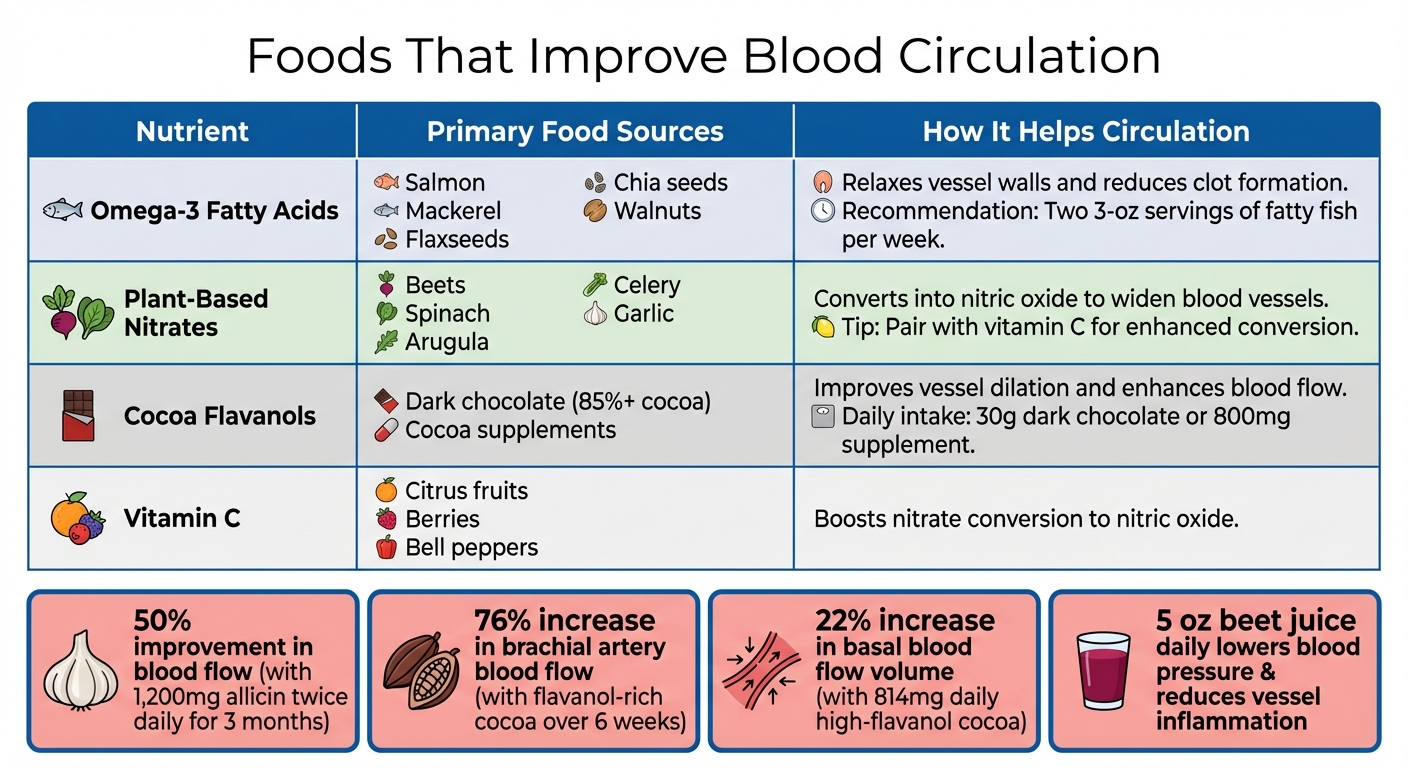
Foods That Improve Blood Circulation: Nutrients, Sources, and Benefits
What you eat plays a big role in how well your blood flows. Along with regular exercise, adjusting your diet can make a noticeable difference. Certain nutrients help your blood vessels relax and expand, while others work to reduce clots and inflammation that might block proper circulation.
Add Omega-3 Fatty Acids and Plant-Based Nitrates
Omega-3 fatty acids found in fatty fish like salmon and mackerel can improve circulation by boosting nitric oxide levels, which relaxes vessel walls and prevents platelets from clumping together. The American Heart Association suggests eating two 3-ounce servings of fatty fish each week. If fish isn’t part of your diet, you can turn to plant-based options like flaxseeds, chia seeds, or walnuts.
Plant-based nitrates are another circulation-friendly addition. Vegetables like beets, spinach, and arugula are packed with nitrates, which your body converts into nitric oxide to help widen your arteries. For instance, a study found that patients with coronary artery disease who consumed 1,200 mg of allicin (found in garlic) twice daily for three months experienced a 50% improvement in blood flow through their upper arm artery. To maximize the benefits, chew spinach thoroughly, as oral bacteria play a key role in converting nitrates into nitric oxide.
Pair nitrate-rich foods with sources of vitamin C, such as citrus fruits or bell peppers, to enhance the conversion of nitrates into nitric oxide. Drinking 5 ounces of beet juice daily has also been shown to lower blood pressure and reduce inflammation in blood vessels.
Use High-Flavanol Cocoa for Heart Health
Cocoa flavanols, including epicatechin and catechin, are known to boost nitric oxide levels and improve the function of blood vessels. In one study, consuming flavanol-rich cocoa increased blood flow in the brachial artery by up to 76% over six weeks. Another study showed that daily intake of high-flavanol cocoa (814 mg per day) increased basal blood flow volume by 22% and expanded the brachial artery diameter by 6%.
For the best results, opt for dark chocolate with at least 85% cocoa content. This ensures a high concentration of beneficial polyphenols. If you’re looking to avoid added sugars, sugar-free cocoa is an excellent choice. Consuming 30 grams daily has been shown to enhance nitric oxide levels and lower blood pressure within just 15 days.
If you’re after a more concentrated option, Naturalis High Flavanol Cocoa provides a supplement specifically designed to support heart health and circulation. Unlike standard chocolate bars, this supplement avoids added fats and sugars, making it easier to reach the high dosages (around 800 mg per day) used in clinical studies that demonstrated significant vascular benefits.
| Nutrient | Primary Food Sources | How It Helps Circulation |
|---|---|---|
| Omega‑3s | Salmon, mackerel, flaxseeds, chia seeds, walnuts | Relaxes vessel walls and reduces clot formation |
| Nitrates | Beets, spinach, arugula, celery | Converts into nitric oxide to widen blood vessels |
| Cocoa Flavanols | Dark chocolate (85%+ cocoa), cocoa supplements | Improves vessel dilation and enhances blood flow |
| Vitamin C | Citrus fruits, berries, bell peppers | Boosts nitrate conversion to nitric oxide |
Lifestyle Habits to Support Healthy Blood Flow
In addition to regular exercise and a nutrient-packed diet, adopting simple lifestyle habits can go a long way in keeping your blood flowing efficiently. These practices help maintain healthy blood volume, reduce swelling, and ease the strain on your heart.
Stay Hydrated for Better Blood Flow
Drinking enough water is crucial for keeping your blood at the right consistency. When you're dehydrated, your blood volume decreases, and it can become thicker, making your heart work harder to circulate it. As the British Heart Foundation notes, "Around half of your blood is made of water, so staying hydrated is key. If you're not drinking enough fluid, you will have less blood in your body, and your blood may also become thicker".
Aim for 6–8 glasses of water daily, or up to 64 ounces if you're active or in warmer climates. Having a reusable water bottle handy can make it easier to sip throughout the day. However, if you have heart-related conditions or other health concerns, check with your doctor before increasing your water intake. Staying hydrated, paired with simple habits like elevating your legs, can help keep your circulation steady.
Elevate Your Legs to Reduce Swelling
Using gravity to your advantage can be as easy as propping up your legs. Elevating your feet above your heart level reduces pressure on vein valves and prevents blood from pooling in your lower body.
Try raising your legs 6–12 inches above your heart for 15–20 minutes, 3–4 times daily. Gently flex your feet while elevated to encourage better circulation. A leg pillow or firm cushions can make this more comfortable. Just be mindful to avoid locking your knees, as this could restrict blood flow.
Try Dry Brushing for Skin Stimulation
Dry brushing is a simple technique that involves using a natural, soft-bristle brush on dry skin to stimulate surface blood flow and support the lymphatic system in clearing out waste. Before showering, brush your skin with long, upward strokes, starting at your feet and moving toward your heart. This quick routine can give your circulation a gentle boost while refreshing your skin.
At-Home Techniques to Improve Circulation
Looking to improve circulation from the comfort of your home? These simple yet effective methods can help boost blood flow without the need for fancy equipment or trips to a specialist.
Self-Massage for Better Circulation
Self-massage is a powerful way to get your blood moving. By using your fingers and hands, you can stimulate blood and lymph flow, widen blood vessels, and improve the delivery of oxygen and nutrients to your tissues.
Here are a few techniques to try:
- Effleurage: With your hands flat, gently stroke along your arms or legs in a directional motion. This helps widen blood vessels and encourages better flow.
- Wringing: Place your hands on either side of a muscle and gently pull toward the center. This motion helps flush out waste products.
- Lymphatic Drainage: Apply light, upward pressure along your limbs to guide waste toward your lymph nodes.
Focus on areas like your hands, feet, and calves - especially if you’ve been sitting or standing for long periods. These areas often need extra attention to keep blood moving smoothly.
If you’re looking for additional support, consider gear designed to aid circulation.
Wear Compression Socks for Leg Support
Compression socks are a simple yet effective way to support blood flow in your legs. They work by applying graduated pressure - tighter at the ankle and gradually loosening as they go up the leg - to help veins push blood back to the heart.
Dr. Robert H. Shmerling, Senior Faculty Editor at Harvard Health Publishing, explains it well:
"The way these little valves are designed, blood flow can only go in one direction. With the help of leg muscle contractions, blood goes through the valves, they close behind it, and blood moves in the correct direction toward the heart."
Whether you’re recovering from a long day on your feet or just want to give your circulation a boost, these socks can make a noticeable difference.
Other Tips to Promote Circulation
Beyond exercise and a balanced diet, small changes in your daily habits can also make a big difference when it comes to improving circulation.
Quit Smoking to Support Vascular Health
Smoking is one of the most harmful habits for your circulatory system. Nicotine causes blood vessels to tighten, limiting blood flow and reducing the availability of nitric oxide, which is essential for relaxing arteries. Over time, smoking speeds up plaque buildup in the arteries and reduces oxygen delivery to muscles and organs. Dr. Deborah Hornacek, a Vascular Medicine Specialist at Cleveland Clinic, highlights this issue:
"Nicotine causes tightening of the vessels which restricts blood flow."
The good news? Quitting smoking stops further damage almost immediately, giving your blood vessels a chance to recover. Resources like Smokefree.gov offer free, research-backed tools to help you quit. Additionally, stress management techniques such as yoga, meditation, or deep breathing can make it easier to resist the urge to smoke. It’s also important to avoid e-cigarettes - while they might seem like a safer option, even small amounts of nicotine from vaping can harm your vascular health.
Wear Loose Clothing to Prevent Restricted Blood Flow
Your wardrobe choices might not seem like a big deal, but wearing tight clothing can actually hinder circulation. Tight pants, belts, or poorly fitting shoes can compress blood vessels, making it harder for blood to flow freely. The British Heart Foundation points out:
"Clothing that puts pressure on certain areas of your body can restrict blood flow. Instead, try to wear loose, comfortable clothes and correctly fitting footwear."
Opting for looser clothing can reduce this unnecessary pressure, helping your circulatory system function more effectively. Footwear is especially important - tight shoes can restrict blood flow to your feet, an area where circulation already faces challenges due to gravity. Choosing properly fitting shoes and comfortable clothing can make a noticeable difference.
Conclusion
Improving circulation at home doesn’t require a complete lifestyle overhaul. By weaving in small, intentional habits, you can naturally enhance blood flow and support your heart health.
Incorporate regular aerobic exercise, eat foods packed with omega-3s and nitrates, stay hydrated, and adopt simple practices like elevating your legs or choosing loose, comfortable clothing. Prevention is key, as Dr. Marlos Fernandes, Interventional Cardiologist, emphasizes:
"The best bang for your buck is prevention."
Start with just one or two manageable changes and build from there. These steady, consistent efforts can help ward off serious cardiovascular problems while boosting your energy, reducing swelling, and enhancing your overall well-being.
FAQs
What are some simple exercises to naturally improve blood circulation at home?
Improving blood circulation at home doesn’t have to be complicated. With the right exercises, you can boost blood flow effectively and easily.
- Walking: Whether you take a brisk walk or a leisurely stroll, walking is a simple way to get your legs moving and encourage better circulation. Plus, it’s easy to fit into your daily schedule.
- Cycling: Pedaling on a stationary bike or riding outdoors engages your leg muscles in rhythmic contractions, which naturally promote healthy blood flow.
- Yoga or tai chi: These gentle practices combine flowing movements with deep breathing, helping to improve circulation while being kind to your joints.
Even small actions, like rotating your ankles or doing heel raises while sitting, can make a difference. These quick and simple movements are easy to incorporate into your day and can naturally support better blood flow.
How does what I eat affect blood circulation?
Your food choices play a big role in how well your blood circulates. Nutrients such as flavanols, antioxidants, and omega-3 fatty acids are key players in keeping blood vessels flexible and ensuring smooth blood flow. On the flip side, overloading on saturated fats, added sugars, or sodium can lead to stiffened arteries, increased inflammation, and poorer circulation over time.
To boost blood flow, include foods like dark chocolate, green tea, watermelon, beets, citrus fruits, nuts, olive oil, and fatty fish in your diet. These are packed with compounds that help improve blood vessel function, minimize clotting, and support heart health. Combine these with plenty of water, whole grains, vegetables, and lean proteins to give your circulatory system the support it needs.
Can simple lifestyle changes improve blood circulation quickly?
Yes, small, consistent lifestyle changes can noticeably improve blood circulation within days or weeks. Simple activities like regular aerobic exercise - whether it's walking, swimming, or even light jogging - can naturally boost blood flow. Staying hydrated and finding ways to manage stress are also key contributors to better circulation.
On top of that, adding heart-friendly foods to your diet can make a big difference. For instance, foods rich in cocoa flavanols or omega-3 fatty acids are known to support healthier blood flow. These adjustments are easy to incorporate into daily life and can have a positive impact on your overall well-being.