


Ever feel like your energy levels are on empty? Low energy often stems from poor circulation, dehydration, lack of exercise, or insufficient sleep. Improving blood flow is key to boosting your energy naturally. Here’s what you can do:
- Focus on circulation: Poor blood flow reduces oxygen delivery to your cells, leading to fatigue.
- Incorporate cocoa flavanols: Found in products like Naturalis High Flavanol Cocoa, these compounds improve blood vessel function and energy levels.
- Simple daily habits: Stay hydrated, move more, and manage stress with breathing exercises.
Naturalis High Flavanol Cocoa offers 600 mg of flavanols per serving, supporting better circulation without added sugar or high calories. Pair this with small lifestyle changes for sustained energy throughout the day.
Hack Your Health: Natural Energy Boosters
How Blood Flow Affects Your Energy
Your circulatory system is like a 60,000-mile delivery network, tirelessly working to keep your body running. It’s your heart’s job to pump oxygen-rich blood through arteries to every cell, while veins carry waste products away. When this system runs smoothly, your cells generate ATP - the energy your body relies on. But when circulation slows down, oxygen and nutrients can’t reach cells as effectively, which hampers their ability to function. This drop in efficiency directly lowers energy production and can even start to affect heart health.
When blood flow is poor, your cells don’t get the oxygen they need to operate properly. Your mitochondria - the energy powerhouses of your cells - depend on oxygen to convert glucose into usable energy. Without it, fatigue sets in. Essentially, poor circulation leaves your cells running on empty.
Inactivity can make things worse. A sedentary lifestyle weakens your heart and lungs and even reduces the density of capillaries, which are vital for delivering oxygen. This is why even simple physical tasks can feel draining when your circulation is less than optimal.
Why Heart Health Matters for Energy
The health of your heart plays a huge role in maintaining your energy levels. Every heartbeat sends nutrient-rich blood to your muscles, organs, and brain. When your arteries are in good shape - flexible and free of blockages - blood flows easily, delivering oxygen and nutrients while removing waste like carbon dioxide.
A key player in this process is nitric oxide, a molecule your body naturally produces. It helps relax your blood vessels, improving circulation. Exercise stimulates your arteries to release more nitric oxide, which helps open up blood vessels and enhances blood flow.
"When your arteries sense exercise, they increase the release of nitric oxide which relaxes blood vessels and improves blood flow." - Deborah Hornacek, MD, Vascular Medicine Specialist
Better circulation means your cells get more oxygen, which translates to more efficient energy production. Regular exercise also helps by encouraging the growth of capillaries, effectively expanding your body’s internal delivery network.
Signs Your Circulation May Be Poor
Your body often sends clear signals when blood flow isn’t up to par. One of the earliest signs is cold hands and feet. These extremities are the furthest from your heart, so they’re the first to feel the effects of reduced circulation. You might also notice numbness, tingling, or the familiar “pins and needles” sensation in your limbs.
Other signs include muscle pain or cramping during movement. When your muscles don’t get enough oxygen-rich blood, they can feel heavy or sore. Reduced blood flow to the brain can cause brain fog or a lack of mental clarity. Even your skin can offer clues - a pale, bluish, or purplish tint may indicate lower oxygen levels.
| Common Sign | What It Means |
|---|---|
| Cold Extremities | Insufficient blood flow to hands and feet |
| Persistent Fatigue | Cells lack oxygen needed for energy production |
| Muscle Cramping | Inadequate oxygen delivery during movement |
| Numbness/Tingling | Reduced blood flow to nerves |
| Skin Color Changes | Pale or bluish skin from low oxygen levels |
| Swelling in Legs | Fluid buildup when veins can’t clear waste efficiently |
Recognizing these warning signs is the first step toward addressing circulation issues. By improving blood flow, you can naturally boost your energy and support your heart’s health.
Cocoa Flavanols: A Natural Way to Improve Energy and Blood Flow
If you're searching for a natural way to keep your energy levels steady, cocoa flavanols could be the answer. These compounds, found in cacao, work hand-in-hand with your circulatory system to improve blood flow, ensuring oxygen and nutrients reach your cells more effectively. By helping your blood vessels function more efficiently, cocoa flavanols provide a consistent energy boost while supporting your body's natural circulation processes.
How Cocoa Flavanols Promote Better Circulation
Cocoa flavanols, particularly epicatechin, play a key role in boosting nitric oxide production. This helps widen blood vessels (a process called vasodilation), improving the delivery of oxygen and nutrients while reducing strain on your arteries. But that’s not all - they also improve arterial flexibility, protect your cardiovascular system, and prevent LDL cholesterol from oxidizing. These actions help reduce the risk of blood clots and keep arteries clear, ensuring your heart doesn’t have to work overtime to pump blood. The result? Your cells get a steady supply of oxygen, which is critical for maintaining energy levels.
Research Supporting Cocoa Flavanols
The benefits of cocoa flavanols for circulation and energy are backed by solid research. Studies like the Flaviola Health Study and the Cocoa, Cognition, and Aging Study highlight how daily cocoa flavanol consumption improves blood vessel function, lowers blood pressure, and enhances insulin sensitivity. One study even found that six weeks of cocoa consumption boosted blood flow in the brachial artery by an impressive 76% in overweight adults.
"Cocoa flavanols exert their benefits by supporting healthy levels of nitric oxide, a molecule naturally produced by your body that promotes healthy blood flow and the transport of oxygen and nutrients from head to toe." - FlavaNaturals
For these benefits, clinical trials suggest a daily intake of 500–1,000 mg of cocoa flavanols. While some effects, like improved blood flow, can be felt within hours, the most noticeable results typically develop after about two weeks of consistent use. Regular consumption has also been linked to a 21% reduction in coronary heart disease risk and a 22% drop in cardiovascular disease risk over 10 years. These findings highlight how cocoa flavanols can be a simple yet effective addition to your routine for better heart health and sustained energy.
sbb-itb-e973f61
Naturalis High Flavanol Cocoa: A Practical Option for Daily Energy
High-Flavanol Cocoa vs Regular Cocoa: Nutritional and Health Benefits Comparison
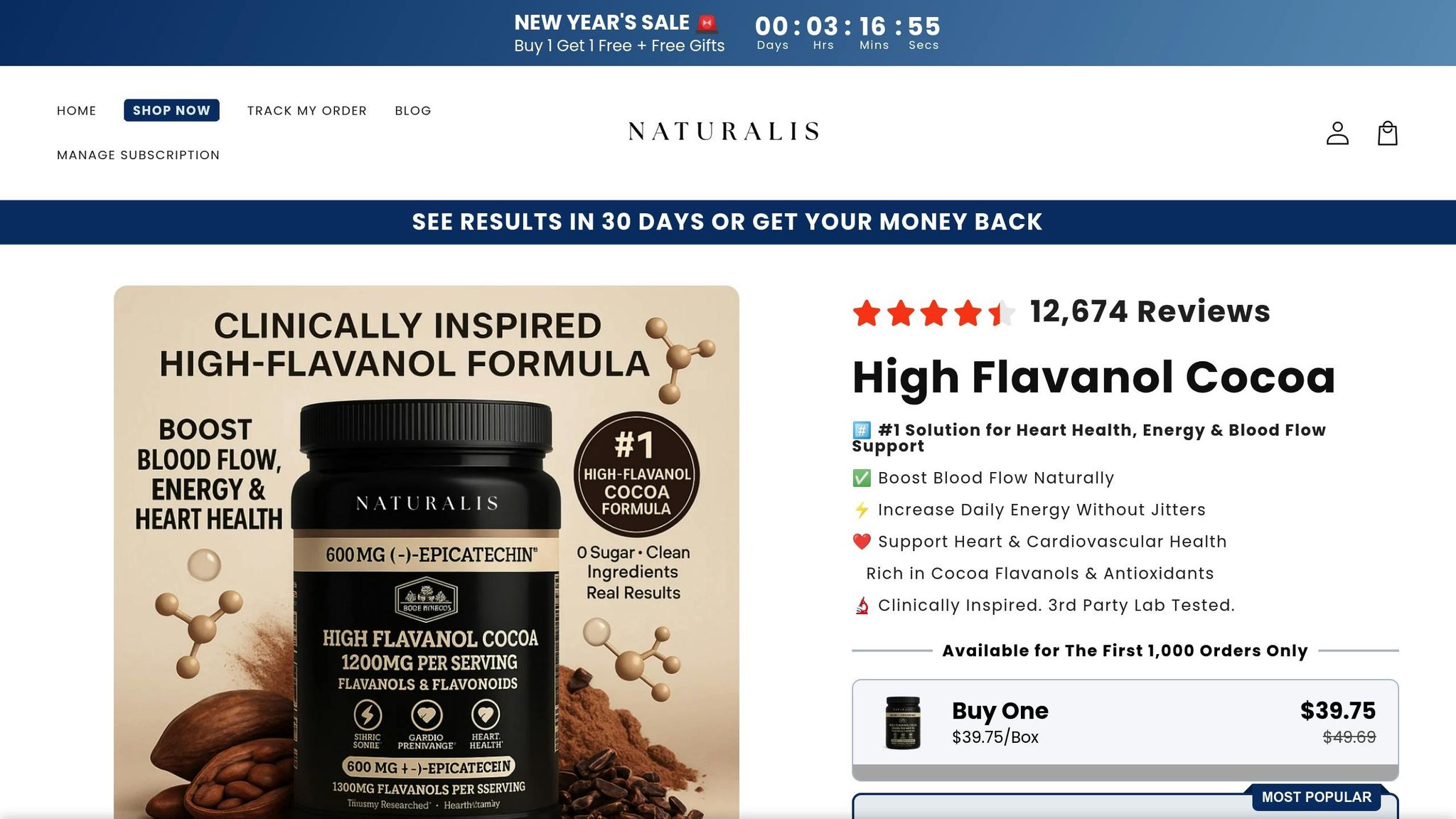
Naturalis High Flavanol Cocoa builds on the benefits of cocoa flavanols for circulation, offering a convenient way to support your daily energy needs. This product not only promotes better blood flow but also helps maintain steady and natural energy levels.
What Makes Naturalis High Flavanol Cocoa Stand Out
With 600 mg of flavanols per serving - 10 to 12 times more than standard cocoa powder - Naturalis High Flavanol Cocoa delivers a powerful dose of these bioactive nutrients. Thanks to minimal processing, the flavanols are preserved, supporting improved circulation and providing energy without the dreaded sugar crash.
Each serving contains just 10 calories and no added sugar, making it easy to incorporate into your daily routine. Within two hours of consumption, it can enhance blood flow, ensuring your body receives the oxygen and nutrients it needs for sustained vitality.
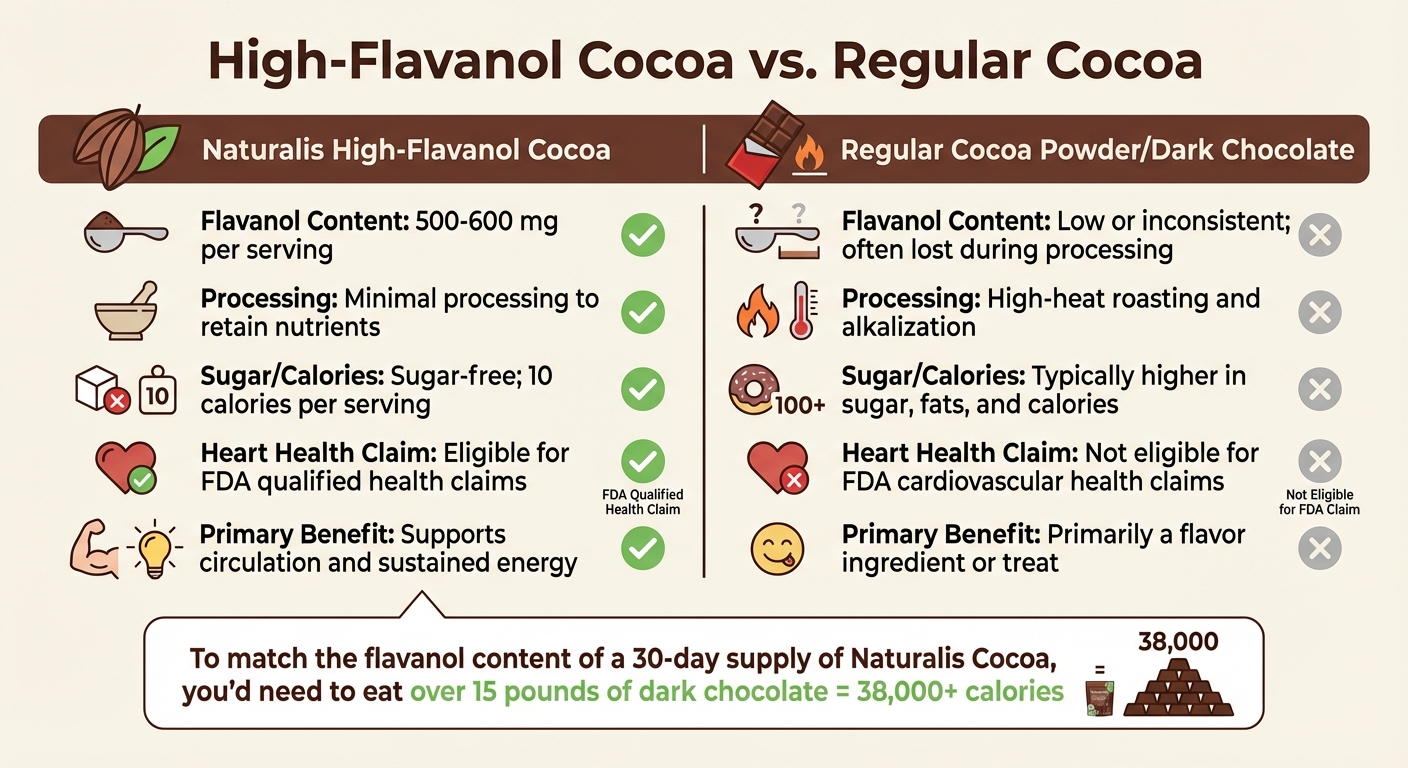
High-Flavanol Cocoa vs. Regular Cocoa
| Feature | Naturalis High-Flavanol Cocoa | Regular Cocoa Powder / Dark Chocolate |
|---|---|---|
| Flavanol Content | 500–600 mg per serving | Low or inconsistent; often lost during processing |
| Processing | Minimal processing to retain nutrients | High-heat roasting and alkalization |
| Sugar/Calories | Sugar-free; 10 calories per serving | Typically higher in sugar, fats, and calories |
| Heart Health Claim | Eligible for FDA qualified health claims | Not eligible for FDA cardiovascular health claims |
| Primary Benefit | Supports circulation and sustained energy | Primarily a flavor ingredient or treat |
The FDA acknowledges that high-flavanol cocoa powders with at least 4% naturally preserved cocoa flavanols can help reduce the risk of cardiovascular disease - a benefit regular cocoa or chocolate cannot claim. To match the flavanol content of a 30-day supply of Naturalis Cocoa, you'd need to eat over 15 pounds of dark chocolate, which would add up to more than 38,000 calories.
This stark contrast highlights why Naturalis Cocoa is an easy and efficient choice for daily use.
How to Incorporate Naturalis Cocoa into Your Routine
Adding Naturalis Cocoa to your daily life is simple. Stir a serving into your morning coffee, blend it into a smoothie, or mix it with yogurt. For the best results, use it consistently for at least two weeks to maximize its benefits for blood vessel health . Be sure to keep the water temperature below 120°F (49°C) when preparing it to maintain the integrity of the flavanols.
At $49.69 for a month's supply, Naturalis High Flavanol Cocoa offers an affordable way to enhance your energy and circulation without requiring major lifestyle changes. By making it a daily habit, you can enjoy better blood flow and lasting vitality.
Simple Lifestyle Changes to Support Better Energy
Naturalis High Flavanol Cocoa can do wonders for circulation, but pairing it with a few everyday habits can amplify your energy levels. By tweaking how you hydrate, move, and manage stress, you can feel more energized throughout the day. These small changes can have a big impact.
Drinking Enough Water for Better Blood Flow
Did you know that about half of your blood is made up of water? Staying properly hydrated is essential for keeping your blood flowing smoothly. When you're dehydrated, your blood thickens, making your heart work harder to pump oxygen and nutrients to your cells. The result? Fatigue often sets in as your body's first cry for more fluids.
The British Heart Foundation puts it simply: “Around half of your blood is made of water, so staying hydrated is key. If you're not drinking enough fluid, you will have less blood in your body, and your blood may also become thicker”. To keep things moving efficiently, aim for 6 to 8 glasses of water daily. Stick to plain water to avoid the energy dips that sugary drinks can cause. However, if you have a history of heart failure, it's best to check with your doctor before increasing your fluid intake.
Hydration doesn’t just support circulation - it also primes your body for the benefits of regular movement and stress management.
Adding More Movement to Your Day
Getting your body moving is one of the quickest ways to improve circulation. When you’re active, your arteries release nitric oxide, which helps relax blood vessels and promotes better blood flow. Your veins also rely on muscle contractions - especially in your legs - to push blood back to your heart and prevent pooling.
"When our arteries sense exercise, they increase the release of nitric oxide which relaxes blood vessels and improves blood flow." – Deborah Hornacek, MD, Vascular Medicine Specialist
The good news? You don’t need to hit the gym to see results. Research shows that taking a five-minute walk six times during a work shift can boost your energy and improve your mood. Experts recommend aiming for at least 150 minutes of moderate activity each week. Even small actions - like standing up to stretch every hour, taking a brisk walk during lunch, or quickening your pace while running errands - can deliver oxygen to your cells and keep your energy levels steady.
While movement keeps your blood flowing, managing stress can help you maintain that balance.
Managing Stress with Simple Breathing Exercises
Stress doesn’t just take a toll on your mind - it can sap your energy by increasing your heart rate and straining your blood vessels. Relaxation techniques such as deep breathing, meditation, and yoga can help you manage stress and conserve energy. Deep breathing, in particular, improves oxygen circulation, helping you feel calmer and more grounded.
Mind-body practices like yoga, tai chi, or Pilates are excellent options for boosting circulation while simultaneously relieving stress. The best part? You don’t need any fancy equipment to get started.
Conclusion: Building Long-Term Energy Naturally
Feeling drained doesn’t have to be your everyday reality. By prioritizing circulation and heart health, you can tackle one of the key reasons behind low energy. When your blood flows efficiently, it delivers the oxygen and nutrients your body and brain need to stay energized.
To recap, cocoa flavanols provide a science-supported way to enhance this process. They boost nitric oxide levels, which helps blood vessels relax, improving oxygen delivery throughout your body. While you might feel some effects within hours, the real game-changer is consistency. A daily dose of 500–1,000mg of cocoa flavanols can increase artery dilation by 24% in just one day, with even greater benefits stabilizing after about two weeks. Notably, clinical trials for heart and metabolic health often use this same range.
If you’re looking for a practical solution, Naturalis High Flavanol Cocoa offers 500mg of flavanols per serving. It’s a smart alternative to consuming dark chocolate, which often comes with extra calories. At $49.69 for a month’s supply, it provides a convenient way to support your circulation every day.
Pairing cocoa flavanols with simple habits can amplify their benefits. Staying hydrated, taking short walks, and practicing easy breathing exercises are natural ways to boost circulation and energy. As Dr. Mariann Giles of Ohio State Integrative Medicine advises:
"Don't wait until you are tired to fight fatigue. It's best to prevent fatigue by living a healthy, balanced life".
FAQs
How can cocoa flavanols naturally boost energy and improve circulation?
Cocoa flavanols play a key role in boosting circulation by enhancing the performance of the endothelium - a thin layer of cells lining your blood vessels. This improvement helps blood vessels relax and widen, ensuring better blood flow and more efficient oxygen delivery to your heart, brain, and muscles.
With improved circulation, your body becomes better equipped to transport oxygen and nutrients, which can help reduce fatigue and support higher energy levels. Including cocoa flavanols in your daily routine can also contribute to overall cardiovascular health, offering a natural way to feel more energized and refreshed.
What are the signs of poor circulation?
Poor circulation often reveals itself through noticeable changes in your hands, feet, and skin. Some common signs to watch for include cold, numb, or tingling sensations in your hands and feet, often accompanied by skin that looks pale, bluish, or purplish. You might also experience swelling in your legs or ankles, skin discoloration, or a persistent aching or throbbing feeling in your limbs.
Additional symptoms can include visible varicose or spider veins, cuts or wounds that take longer to heal, and a sense of heaviness or fatigue in your arms or legs. If you recognize any of these signs, it’s wise to consult a healthcare professional for guidance and further evaluation.
What’s the best way to add Naturalis High Flavanol Cocoa to my daily routine?
Incorporating Naturalis High Flavanol Cocoa into your daily routine is an easy way to support energy levels and heart health. To meet the recommended 500–1,000 mg of flavanols each day, try these simple ideas:
- Morning boost: Add a tablespoon (about 7 g) to your coffee, tea, or smoothie. It’s a great way to start your day with a rich, chocolatey flavor - no added sugar required.
- Midday treat: Sprinkle it over oatmeal, Greek yogurt, or cottage cheese for a quick and nutritious snack that satisfies.
- Post-workout recovery: Mix it with water or an 8 fl oz sports drink to help with circulation and recovery after exercise.
By making it a regular part of your meals and drinks, you’ll enjoy its benefits for your heart and energy levels, all while adding a delicious twist to your day.