


Protecting your heart doesn't have to be complicated. Small, consistent habits can significantly reduce your risk of heart disease. Here's a quick overview of practical steps you can take every day to support your cardiovascular health:
- Add Cocoa Flavanols: Boost blood flow with raw cacao or dark chocolate (70%+ cacao). Avoid Dutch-processed cocoa.
- Eat Heart-Healthy Foods: Incorporate leafy greens, berries, whole grains, legumes, and healthy fats like salmon or avocados.
- Increase Omega-3s: Aim for two servings of fatty fish weekly or add walnuts, flaxseeds, or chia seeds to your meals.
- Stay Hydrated: Drink 4–6 cups of water daily to maintain good circulation and reduce strain on your heart.
- Get Active: Exercise for at least 150 minutes weekly. Even light activities like walking or housework help.
- Manage Stress: Practice relaxation techniques like meditation, yoga, or journaling to lower blood pressure.
- Prioritize Sleep: Aim for 7–9 hours of quality sleep nightly to reduce heart disease risks.
- Quit Smoking: Stop smoking and avoid secondhand smoke to protect your heart and blood vessels.
- Limit Alcohol: Stick to moderate drinking - no more than one drink daily for women, two for men.
- Schedule Checkups: Monitor blood pressure, cholesterol, and glucose levels regularly to catch issues early.
These steps are straightforward and easy to incorporate into your daily routine. Even small changes can add up to big improvements for your heart health.
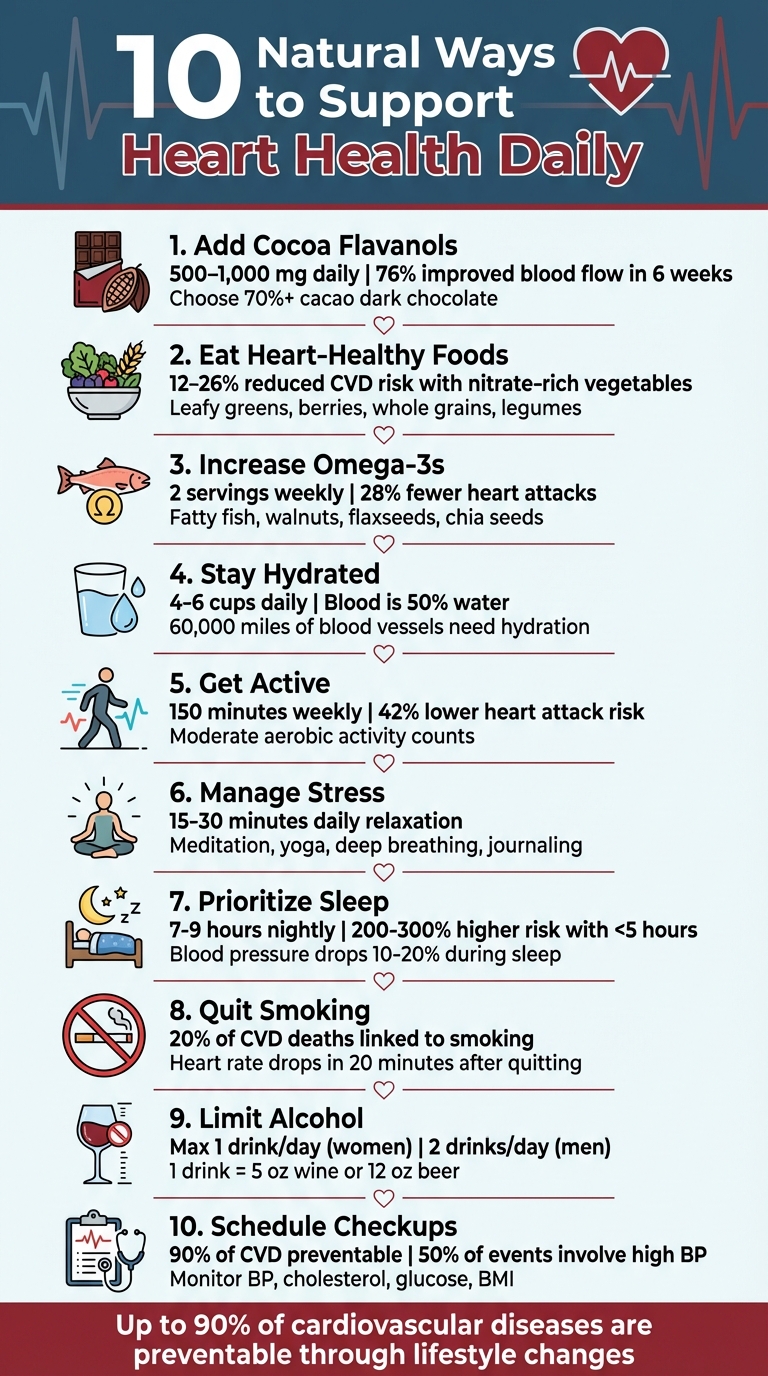
10 Daily Habits to Support Heart Health Naturally
Eight Simple Steps for a Heart-Healthy Lifestyle
sbb-itb-e973f61
1. Add Cocoa Flavanols to Your Daily Routine
Cocoa flavanols, found in cocoa solids, are powerful antioxidants that play a key role in supporting your vascular system. They help increase nitric oxide production, which allows arteries to relax and widen, improving blood flow. Additionally, they help maintain the endothelium, the inner lining of blood vessels, reducing the risk of plaque buildup. In fact, research has shown that consuming flavanol-rich cocoa for just six weeks can enhance blood flow in the brachial artery by as much as 76%.
Getting enough flavanols from chocolate alone can be tricky. Many studies suggest a daily intake of 500–1,000 mg of flavanols, but a single bar of 70%–85% dark chocolate often contains around 600 calories and 24 grams of sugar. To enjoy the benefits without overloading on calories or sugar, opt for dark chocolate with at least 70% cacao or use unsweetened cocoa powder in your recipes.
As Alice H. Lichtenstein, Gershoff professor of nutrition science and policy at Tufts University, explains:
"If you enjoy chocolate, the important thing to do is choose the type you enjoy the most and eat it in moderation because you like it, not because you think it is good for you."
When selecting cocoa products, avoid Dutch-processed cocoa. The alkalization process used in Dutch processing significantly reduces the flavanol content. Instead, go for raw cacao or non-alkalized cocoa powder. There are plenty of easy ways to incorporate these into your diet. Try stirring unsweetened cocoa powder into yogurt, dipping fresh fruit like strawberries or bananas into melted dark chocolate, or making a simple fruit-and-nut bark with dark chocolate, dried cherries, and walnuts. Adding cocoa flavanols to your daily routine is a small but effective step toward better heart health.
2. Eat More Heart-Healthy Foods
You don’t need to completely overhaul your diet to support your heart - small, intentional changes can make a big impact. Start by incorporating nutrient-packed foods that actively benefit your cardiovascular system. Leafy greens like spinach, kale, and collard greens are excellent choices. These greens are rich in nitrates, which help relax and widen blood vessels, improving blood flow. In fact, studies indicate that eating nitrate-rich vegetables can reduce the risk of cardiovascular disease by 12% to 26%.
Next, think about other heart-friendly food groups. Berries, whole grains, and legumes are nutritional powerhouses. Blueberries, strawberries, and raspberries are loaded with antioxidants, which combat inflammation and oxidative stress - two major drivers of heart disease. Whole grains like oats, quinoa, and brown rice are rich in fiber, helping to regulate cholesterol levels. Meanwhile, beans, lentils, and chickpeas provide a double benefit: fiber and plant-based protein, both of which can lower blood pressure and reduce "bad" LDL cholesterol.
Don’t forget to include healthy fats in your diet. Oily fish such as salmon, mackerel, and sardines are packed with omega-3 fatty acids, which help lower triglycerides and boost "good" HDL cholesterol. Avocados are another great source of heart-healthy monounsaturated fats - eating just two servings a week can cut the risk of heart attack or coronary artery disease by 21%. Nuts and seeds, like walnuts, flaxseeds, and chia seeds, are rich in alpha-linolenic acid (ALA), a plant-based omega-3 that has anti-inflammatory benefits.
How you prepare your food matters too. Swap out butter or lard for liquid plant oils like olive or canola oil when cooking. Season your meals with herbs, spices, or lemon juice instead of salt to keep sodium intake under 2,300 mg per day. Choose no-salt-added canned vegetables, remove the skin from poultry, and grill or bake fish to retain its omega-3 benefits.
As Julia Zumpano, RD, LD, from Cleveland Clinic, explains:
"The choices you make every time you're in the kitchen can make a big difference for your heart."
Simple swaps can go a long way. Replace refined grains with whole-grain options, toss a handful of berries into your oatmeal, or blend spinach into your smoothies or soups. Adding healthy fats like those from fish, avocados, and nuts into your meals can bring lasting cardiovascular benefits over time.
3. Add Omega-3 Fatty Acids to Your Meals
Omega-3 fatty acids are key nutrients that help lower triglycerides, maintain healthy blood pressure, support a steady heart rate, and reduce the risk of blood clots.
Surprisingly, about 90% of Americans fall short of the omega-3 intake recommended by the American Heart Association. The good news? Adding omega-3s to your diet is easier than you might think. Aiming for two 3.5-ounce servings of fatty fish per week - like salmon, mackerel, or sardines - can make a big difference. These fish are rich in EPA and DHA, two omega-3 types that your heart can use right away. For instance, a 3-ounce serving of mackerel contains 2.0 grams of omega-3s, while farmed Atlantic salmon provides 1.7 grams.
If you prefer plant-based options, foods like ground flaxseed, chia seeds, and walnuts are excellent sources of ALA, another form of omega-3. Sprinkle 2 tablespoons of ground flaxseed into your oatmeal or smoothie, toss some walnuts into your salad, or cook with canola oil. However, keep in mind that your body converts ALA into EPA and DHA at a very low rate, so seafood remains a more efficient source.
Research backs up the benefits of omega-3s. The VITAL trial revealed that taking 1 gram of omega-3 daily reduced heart attacks by 28% overall, with even greater reductions of 40% among people who consumed little fish and 77% among African Americans. Dr. JoAnn E. Manson from Brigham and Women's Hospital and Harvard Medical School emphasizes:
"Try to get your omega 3s from a heart-healthy diet that includes fish, rather than relying on fish oil supplements."
Incorporating these options into your meals is a natural way to support heart health.
When selecting fish, opt for low-mercury choices like anchovies, herring, salmon, and sardines. Be cautious with high-mercury fish such as king mackerel, swordfish, and bigeye tuna, especially if you're pregnant or preparing food for children.
4. Drink Enough Water for Better Blood Flow
Did you know that blood is about 50% water? That’s why staying hydrated is so important for keeping your blood moving efficiently through your body’s vast network of vessels - about 60,000 miles of them, to be exact. When you don’t drink enough water, your blood volume decreases, and your blood thickens. This forces your heart to work harder to pump it, which can lead to issues like heart palpitations, fluctuations in blood pressure, and reduced circulation to your hands and feet.
Hydration doesn’t just support blood flow; it also plays a role in your overall health. Dehydration can impact your cardiovascular system in ways you might not expect. As Dr. Kyle Markel, M.D., a vascular surgeon at Henry Ford Health, points out:
"Circulation can also affect the immune system."
When your circulation slows due to dehydration, you might experience cold extremities, brittle nails, or slower wound healing.
So, how much water do you actually need? On average, adults should aim for 4–6 cups of plain water daily, though total fluid intake should be around 15.5 cups for men and 11.5 cups for women. Don’t wait until you feel thirsty to drink - thirst is a sign that dehydration has already set in. Instead, sip water steadily throughout the day. A good habit is drinking a glass with meals or when taking medications.
If you’re exercising or spending time in hot weather, you’ll need to drink more to replace fluids lost through sweat. Stick to water or seltzer instead of sugary drinks, which can contribute to inflammation and raise your triglycerides. If you have specific health conditions like heart, kidney, or liver issues - or if you’re on medications like diuretics - talk to your doctor about how much water is right for you. In some cases, fluid intake might need to be limited.
Building consistent hydration into your daily routine is a simple yet powerful way to support your health.
5. Get Regular Physical Activity
Staying active does wonders for your heart. Regular exercise helps lower "bad" LDL cholesterol, boosts "good" HDL cholesterol, and keeps your blood pressure in check. Beyond heart health, it also lowers the risk of type 2 diabetes, depression, and even some types of cancer.
Experts suggest adults aim for at least 150 minutes of moderate aerobic exercise per week - think brisk walking - or 75 minutes of more vigorous activity like running or cycling. If finding time feels tough, break it into smaller chunks, like three 10-minute sessions a day. These small steps can make a big difference in keeping your heart strong.
Dr. Jerome Fleg, M.D., from the NHLBI, shares an encouraging message:
"Any activity is better than none. And any age and place is a great place to start."
Despite the clear benefits, about half of adults fall short of these exercise goals. The consequences are serious: inactive people are nearly twice as likely to develop heart disease compared to those who stay active. The good news? Up to 90% of cardiovascular diseases could be avoided through lifestyle changes like regular movement.
You don’t need a gym membership or fancy equipment to get started. Everyday activities like brisk walking, dancing, biking, or even household chores - vacuuming, raking leaves, mowing the lawn - can all count. Small changes can add up: take the stairs instead of the elevator, park farther from the entrance, or pace during phone calls. A study of 5,861 women aged 72–85 found that those who moved lightly for more than 5.6 hours per day were 42% less likely to experience a heart attack or die from heart disease.
Consistency is key. Just like heart-healthy foods and stress management, regular movement is essential for long-term heart health. Focus on building a routine - try exercising at the same time each day to make it stick. If you're just starting out, remember that even five minutes of light activity can make a difference. Gradually increase your effort over time. As UChicago Medicine puts it, "Every active minute counts toward your goal".
6. Use Stress Management Techniques
Chronic stress can take a serious toll on your heart. When stress lingers, it keeps your body stuck in "fight or flight" mode, which can lead to high blood pressure - a major contributor to heart disease. On top of that, stress often triggers unhealthy habits, like reaching for junk food, which can harm your arteries. As Dr. Dean Karalis, MD, a cardiologist at Jefferson Health, puts it:
"Stress can cause high blood pressure, and is linked to cardiovascular disease."
To protect your heart, shift your attention from stressors to activities that promote relaxation.
Set aside 15–30 minutes each day for relaxation techniques like deep breathing, meditation, yoga, or T'ai Chi. Even keeping a gratitude journal can make a difference. According to the CDC, "Gratitude may be the best kept secret to help reduce stress and feel better".
Building strong social connections also plays a role. Talking with trusted friends or family members can provide the emotional support you need to cope with stress. And if you're feeling overwhelmed, try cutting back on news or social media consumption - constant exposure to negative stories can add unnecessary stress.
7. Get Enough Quality Sleep
Getting enough sleep isn't just about feeling rested - it’s essential for your heart's health and recovery. During deep sleep, your heart rate naturally slows, your blood pressure drops by 10–20%, and your breathing becomes steady and calm. This nightly drop in blood pressure is crucial; without it, your risk of stroke increases significantly.
The numbers are alarming: adults who sleep 5 hours or less per night face a 200% to 300% higher risk of coronary artery buildup, a major warning sign of heart disease. Even cutting sleep to less than 6 hours raises your heart attack risk by 20%. Poor sleep doesn’t just stop there - it ramps up stress hormones like cortisol and triggers inflammation, which damages arteries. It also throws off hunger-regulating hormones, leading to weight gain and a higher chance of developing diabetes. Dr. Phillip LoSavio from UChicago Medicine emphasizes this connection:
"Sleep can have both positive and negative impacts on the heart... Adults with 5 hours of sleep or less have a 200% to 300% higher risk of coronary artery build up."
Marie-Pierre St-Onge, Associate Professor of Nutritional Medicine at Columbia University, explains how poor sleep creates a ripple effect:
"It's absolutely a vicious cycle. Not sleeping well may lead to making poorer choices in all facets of life. Missing sleep may lead to not thinking as clearly, which then leads to poorer choices during the day."
To support your heart health, aim for 7–9 hours of sleep each night. Consistency matters, so stick to a regular sleep schedule - even on weekends. Create a sleep-friendly environment by powering down screens at least an hour before bed to avoid blue light, and make sure your bedroom is cool, dark, and quiet. Also, steer clear of caffeine, alcohol, and heavy meals close to bedtime.
If you’re still struggling with sleep despite these changes, it might be time to discuss sleep apnea with your doctor. Loud snoring, waking up gasping for air, or feeling tired even after a full night’s sleep could signal this condition. Shockingly, while an estimated 50 to 60 million Americans have sleep apnea, only 6 to 7 million are officially diagnosed. Addressing sleep disorders like this can make a profound difference in protecting your heart.
8. Stop Smoking and Avoid Secondhand Smoke
If you're serious about protecting your heart, quitting smoking is one of the most impactful steps you can take. Cigarette smoke contains over 7,000 harmful chemicals that wreak havoc on your heart and blood vessels. It promotes plaque buildup, thickens your blood, and increases the risk of dangerous clots. Carbon monoxide from smoking replaces oxygen in your blood, forcing your heart to work harder to keep you going.
Smoking is a leading cause of death in the United States, responsible for about 1 in every 5 deaths annually. Nearly 20% of all cardiovascular disease deaths are directly tied to smoking. Even smoking just one or two cigarettes a day significantly raises your chances of a heart attack or stroke. In fact, smokers are more than twice as likely to have a heart attack compared to those who don't smoke.
The good news? Your body starts to recover as soon as you quit. Within just 20 minutes, your heart rate begins to drop. After 12 hours, carbon monoxide levels in your blood return to normal, allowing oxygen to flow more freely. Over the next few weeks, your blood circulation improves, and after a year without smoking, your risk of heart disease is cut in half. Four years smoke-free? Your stroke risk matches that of someone who has never smoked. By quitting, you're not just avoiding harm - you’re actively helping your heart and blood vessels heal.
Need help quitting? FDA-approved nicotine replacement therapies and professional support can make the process easier. Programs like Freedom From Smoking have helped many people succeed. One participant shared:
"Freedom From Smoking helped me quit because I felt I had the encouragement and support of a whole movement behind me... Step-by-step and day by day, the program was easy to follow and I was able to go at my own pace".
For additional support, you can reach out to the American Lung Association Lung HelpLine at 1-800-LUNGUSA (1-800-586-4872) for free expert advice.
Protecting your heart also means steering clear of secondhand smoke. Non-smokers exposed to it regularly face a 25% to 30% higher risk of developing coronary heart disease. In the U.S. alone, secondhand smoke exposure contributes to around 30,000 coronary heart disease deaths each year. To reduce your risk, establish smoke-free spaces in your home and car, and avoid indoor places where smoking is permitted.
Taking these steps can significantly improve your heart health and overall well-being. Up next, let’s talk about how cutting back on alcohol can further protect your heart.
9. Reduce Your Alcohol Intake
While red wine is often touted for its potential benefits, the risks of excessive alcohol consumption far outweigh any perceived advantages. Drinking too much alcohol can lead to higher blood pressure, impaired heart function, and an increased risk of stroke. In severe cases, heavy drinking may result in alcohol-induced cardiomyopathy - a condition where the heart muscle weakens and becomes deformed, making it harder for the heart to pump blood effectively. Alarmingly, between 40% and 80% of individuals diagnosed with this condition who continue heavy drinking do not survive beyond 10 years.
Keeping your alcohol intake in check is a vital part of maintaining heart health. Binge drinking - defined as consuming four or more drinks for women and five or more for men in a single occasion - can lead to "holiday heart syndrome", a condition that disrupts normal heart rhythms like atrial fibrillation. This increases the likelihood of blood clots and stroke. Even moderate alcohol consumption has been linked to higher risks of chronic diseases and overall mortality compared to abstaining entirely.
The U.S. Dietary Guidelines for Americans recommend limiting alcohol to no more than one drink per day for women and two for men. To put it into perspective, a "standard" drink equals 12 ounces of regular beer (5% ABV), 5 ounces of wine (12% ABV), or 1.5 ounces of distilled spirits (40% ABV). These guidelines emphasize that these limits apply to a single day, not as an average over several days. If you don’t currently drink, health professionals advise against starting.
"Heavy alcohol use is detrimental to your heart health." – Mayo Clinic
For individuals with alcohol-related heart conditions, complete abstinence can often lead to noticeable recovery within three to six months. To help reduce your alcohol intake, consider using a mobile app to track your drinks, setting clear limits, and planning alcohol-free days each week. People with heart failure or certain heart rhythm disorders should avoid alcohol altogether. Cutting back on alcohol not only protects your heart but also complements other healthy lifestyle habits.
10. Schedule Regular Medical Checkups
Scheduling regular medical checkups is one of the smartest ways to stay ahead of potential heart issues. High blood pressure, for instance, often has no symptoms but plays a role in about 50% of cardiovascular events worldwide. Regular screenings are the only way to truly understand your heart health numbers.
Start tracking key heart health markers - like blood pressure, cholesterol, blood sugar, and BMI - in your 20s. By the time you hit 45, it’s recommended to include a fasting blood glucose test in your routine and repeat it at least every three years. If you’re overweight, have a family history of heart disease, or face other risk factors, your doctor might suggest more frequent testing.
The American Heart Association emphasizes the importance of building a relationship with a physician early on:
"Establishing a relationship with a physician means you can start heart-health screenings now... Knowing where your numbers stand early makes it easier to spot a possible change in the future."
Key Markers to Monitor
Here’s what to keep an eye on during your checkups:
- Blood pressure: Aim for less than 120/80 mm Hg.
- Cholesterol profile: Non-HDL cholesterol testing no longer requires fasting.
- Blood glucose levels: Regular testing is crucial.
- Waist circumference: Keep it under 35 inches for women and 40 inches for men.
For adults 20 and older, cholesterol should be checked every 4–6 years if risk levels are normal. Once you reach 40, ask your doctor to calculate your 10-year risk of cardiovascular disease or stroke. This personalized evaluation guides how often you should monitor your heart health and whether additional steps are needed.
Regular screenings give you and your doctor the chance to catch any changes early, allowing you to address potential problems before they escalate into serious concerns. It's all about staying proactive and prioritizing your well-being.
Conclusion
Caring for your heart doesn’t mean flipping your entire life upside down. It’s about making small, consistent adjustments that add up over time. Dr. Kathleen Drinan, a clinical cardiologist at UChicago Medicine, sums it up perfectly:
"Small changes can have big impacts on long-term heart health".
The idea is to start with simple, manageable steps that fit into your daily routine.
Here’s a powerful fact: up to 90% of cardiovascular diseases could be prevented through education and proactive lifestyle choices. The small, everyday decisions - like what you eat for breakfast, whether you opt for the stairs, or how you handle stress - shape your heart health in the long run. Even light physical activities, like household chores, contribute. Research shows that women who engage in light physical activity for more than 5.6 hours a day are 42% less likely to experience a heart attack or die from heart disease. These small, consistent choices create a ripple effect, laying the groundwork for even healthier habits.
The secret is consistency, not perfection. Doing heart-healthy activities at the same time each day can help turn them into automatic habits. Interestingly, improving one area often sparks improvements in others. For instance, better sleep can make it easier to stick to a healthy diet and stay active. As Marishka Brown, Ph.D., Director of the National Center on Sleep Disorder Research at NHLBI, explains:
"When we make small, healthy changes in one area, we often see benefits in others".
That said, big changes should be approached with professional guidance. Before you dive into major lifestyle shifts, consult your doctor - especially if you’re thinking about taking supplements, addressing sleep apnea, or quitting smoking. Your doctor can help monitor key health markers like blood pressure, cholesterol, and blood sugar to ensure you’re on the right track and address any potential issues early. Supplements, for example, can sometimes interact with medications or exacerbate existing conditions.
The best way to start? Pick one or two strategies that feel realistic for you right now. As Dr. Jerome Fleg, a cardiologist and medical officer at NHLBI, puts it:
"Any activity is better than none. And any age and place is a great place to start".
Every small step you take builds toward a healthier heart and a healthier you.
FAQs
What are some easy ways to get omega-3s on a vegetarian diet?
Incorporating omega-3s into a vegetarian diet can be easy and delicious with a few thoughtful additions. Try mixing ground flaxseed or flaxseed oil into your oatmeal, smoothies, or even baked goods for a boost. Sprinkle chia seeds or hemp seeds over salads, yogurt, or cereal to add both nutrients and texture. Snack on walnuts or use walnut oil to create flavorful dressings and recipes. Adding soy-based foods like edamame, tofu, or tempeh to your meals is another great option. For EPA and DHA, look to seaweed or algae-based supplements, which provide plant-based sources of these essential fats.
These simple tweaks not only help you meet your omega-3 needs but also keep your meals satisfying and heart-healthy.
What are some simple ways to manage stress for better heart health?
Stress can have a significant impact on your heart, affecting your heart rate, blood pressure, and even contributing to inflammation over time. Finding ways to manage stress isn't just about feeling better in the moment - it’s also essential for your heart health and overall well-being.
Here are a few simple strategies to help manage stress while being kind to your heart:
- Get moving: A brisk 30-minute walk or light exercise can help lower stress hormones and lift your mood. It’s a small commitment with big benefits.
- Practice mindfulness: Activities like deep breathing, meditation, or even keeping a gratitude journal can help quiet your mind and ease stress.
- Stay connected: Spending quality time with friends or family can provide emotional support and help lighten the load of daily challenges.
Incorporating these practices into your daily life can make a meaningful difference in reducing stress and keeping your heart healthier.
What are the most effective ways to quit smoking and improve heart health?
Quitting smoking is one of the most impactful steps you can take for your heart. In fact, just 24 hours after you quit, your blood oxygen levels improve, and your risk of a heart attack starts to decline. Stick with it, and the benefits grow - after only one year without smoking, your risk of heart disease is about half of what it was when you smoked.
To set yourself up for success, start by choosing a quit date and crafting a plan. Think about what triggers your cravings and prepare strategies to address them. Don’t hesitate to reach out for help - a doctor or tobacco-cessation counselor can guide you toward FDA-approved options like nicotine-replacement therapies or medications. Behavioral support, whether through quit-smoking programs or apps, can also provide practical advice and encouragement to keep you motivated.
Building healthier habits can make the process smoother. Regular physical activity, such as walking or moderate exercise, not only helps manage stress but also reduces cravings. Pair this with a heart-friendly diet to support your body’s recovery. It’s also essential to create a smoke-free space - get rid of cigarettes and kindly ask those around you not to smoke. With these tools and strategies, you’ll give your heart the best chance to recover and thrive.