


If you often feel tired, experience cold hands or feet, notice swelling, or have slow-healing wounds, your circulation might need attention. Poor blood flow can lead to discomfort and signal underlying health issues like Peripheral Artery Disease (PAD) or diabetes-related complications. Here are the seven common signs of poor circulation:
- Cold Hands and Feet: Persistent coldness or numbness could mean reduced blood flow to extremities.
- Numbness or Tingling: Pins-and-needles sensations often occur when circulation is restricted.
- Swelling in Legs, Ankles, or Feet: Fluid buildup may point to venous issues or blood pooling.
- Skin Discoloration: Bluish or brown patches can indicate oxygen or blood flow problems.
- Slow-Healing Wounds: Cuts or sores that take longer to heal may signal poor nutrient delivery.
- Leg Pain or Cramping: Pain during activity or at rest may result from narrowed arteries.
- Fatigue or Weakness: Low oxygen and nutrient delivery can leave you feeling drained.
Simple changes like regular exercise, staying hydrated, elevating your legs, and eating a heart-healthy diet can help improve circulation. Natural options like cocoa flavanols, found in dark chocolate, can also support blood flow by relaxing blood vessels and increasing oxygen delivery. If symptoms persist, consult a healthcare provider to address potential underlying conditions.
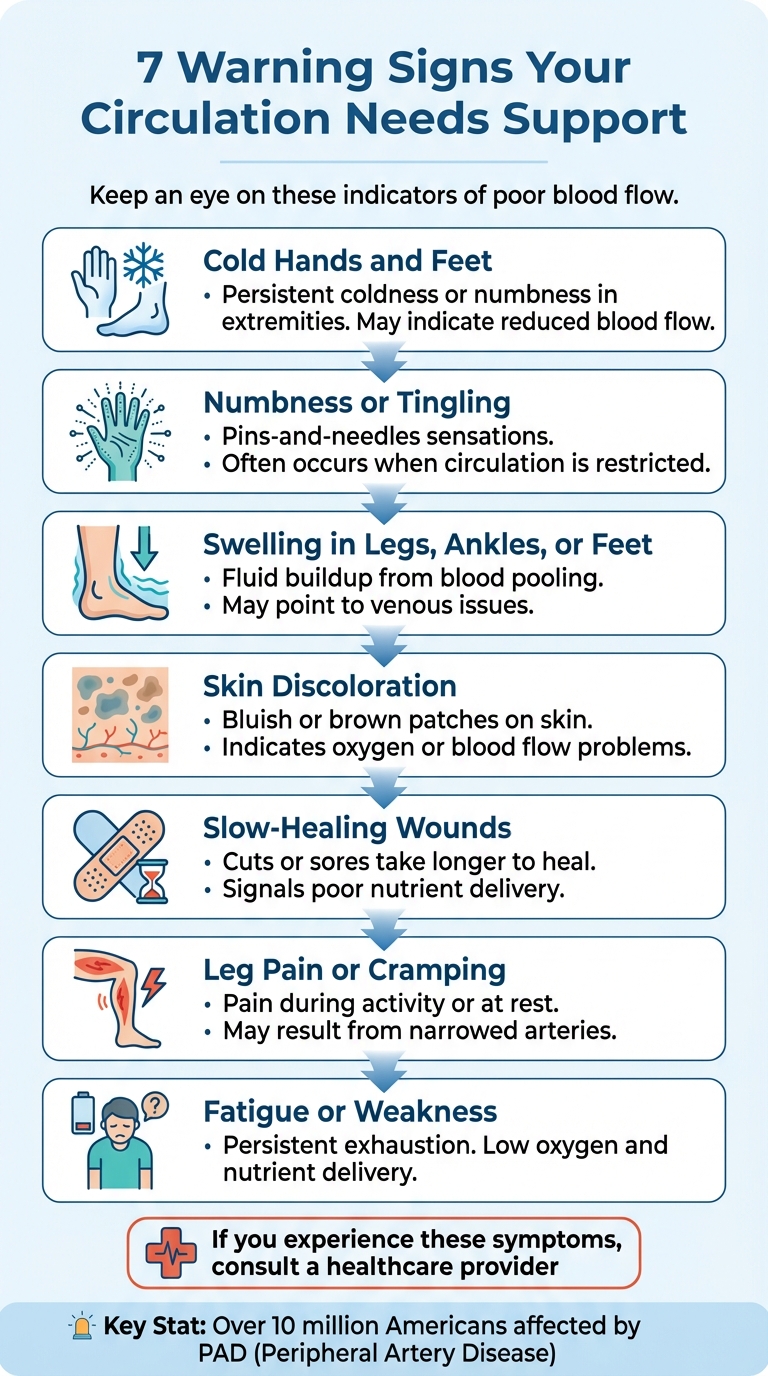
7 Warning Signs of Poor Circulation and What They Mean
1. Cold Hands and Feet
How This Symptom Appears in Everyday Situations
If your hands and feet stay cold even indoors, despite bundling up, it could point to poor circulation. This persistent chill often signals reduced blood flow to your extremities. You might also notice numbness, which can dull your ability to sense temperature properly. After exposure to cold weather, warming up may take longer than usual, sometimes accompanied by mild, throbbing pain as circulation gradually returns.
Health Concerns Linked to This Warning Sign
Cold hands and feet can be a sign that your heart is having difficulty pumping blood to the farthest parts of your body. Conditions like atherosclerosis (plaque buildup), peripheral artery disease, or diabetes can narrow or stiffen blood vessels, restricting blood flow to your extremities. Another possible cause is Raynaud's disease, which affects up to 10 million people in the UK. This condition causes blood vessels to overreact to cold or stress, temporarily cutting off blood flow to fingers and toes.
Simple Steps and Natural Options to Improve the Condition
To encourage better circulation, keep moving. Stretch your extremities or take short walks, especially if you've been sitting for a while. When resting, elevate your feet slightly above your hips to assist blood flow back to your heart. Staying hydrated is also key - aim for six to eight glasses of water daily, as dehydration can thicken your blood and slow circulation.
Dress warmly with layers and thick wool socks, but avoid tight clothing or shoes that could restrict blood flow. A Mediterranean diet - featuring fruits, vegetables, and oily fish - can help reduce fatty plaque buildup in your arteries. However, avoid placing direct heat on numb areas, as this can lead to burns.
In addition to these practical tips, certain natural compounds may further support circulation.
How Cocoa Flavanols Help with Blood Flow
Cocoa flavanols, found in dark chocolate, are a natural way to improve circulation by boosting nitric oxide production. A study from Pennsylvania State University observed that 30 overweight adults who consumed 37g of dark chocolate along with a sugar-free cocoa beverage daily - providing 814 mg of flavanols - showed a 22% increase in basal blood flow and a 6% increase in brachial artery diameter after just four weeks. These flavanols help relax and widen arterial walls, enhancing blood flow throughout the body. Clinical trials suggest that daily doses between 500 mg and 1,000 mg of cocoa flavanols can deliver noticeable circulatory benefits.
sbb-itb-e973f61
2. Numbness or Tingling
How This Symptom Appears in Everyday Situations
That familiar pins-and-needles feeling in your arms, legs, or feet often points to reduced blood flow. It might creep up after sitting or standing for too long, as gravity causes blood to collect in your lower limbs. Even something as simple as a short walk can trigger numbness or cramping, thanks to lactic acid building up when circulation isn't at its best. Cold weather or stress can also bring on sudden numbness in fingers and toes, as blood vessels tighten up. These sensations are your body's way of signaling that blood flow may be compromised.
Health Concerns Linked to This Warning Sign
Ongoing numbness or tingling shouldn't be ignored - it could point to deeper health issues affecting circulation. Peripheral Artery Disease (PAD), for instance, narrows the arteries in your limbs, often causing tingling during physical activity. For those with diabetes, high blood sugar can damage nerves and blood vessels, leading to a condition called diabetic neuropathy, which brings constant numbness. Atherosclerosis, where fatty deposits clog your arteries, can also restrict blood flow, particularly to your extremities. And if you're over 40, your chances of experiencing these circulation-related symptoms increase.
Simple Steps and Natural Options to Improve the Condition
The good news? Small, everyday changes can make a big difference in improving circulation. Try moving regularly, even while sitting - wiggling your toes or rotating your ankles can help keep blood flowing. Elevating your feet above your heart for about 15–20 minutes a day encourages blood to return upward, counteracting the effects of gravity. Staying hydrated is also key; aim for six to eight glasses of water daily to maintain proper blood flow. Compression stockings can offer gentle support by preventing blood from pooling in your legs. And don't underestimate the power of diet - a plate filled with leafy greens, fatty fish, and beets (while cutting back on salt) can help promote healthier circulation.
3. Swelling in Legs, Ankles, or Feet
How This Symptom Shows Up in Daily Life
Ever notice your shoes feeling tighter by the end of the day? That could be a sign of fluid buildup caused by poor circulation. When you sit or stand for long periods, your body has a harder time moving blood back up from your legs due to gravity. This can lead to blood pooling in your lower limbs. You might spot sock marks around your ankles or see puffiness in your feet after a long flight. Cold weather can make things worse by constricting your blood vessels, intensifying the swelling.
Health Issues Related to This Symptom
Ongoing swelling in your legs, ankles, or feet can point to serious circulation problems. One common condition is Chronic Venous Insufficiency (CVI), where weakened vein walls cause blood to flow backward instead of toward the heart. Even more alarming is Deep Vein Thrombosis (DVT), a condition where a blood clot forms in a deep vein. This often results in sudden swelling in one leg, and if the clot travels to the lungs, it can become life-threatening. Peripheral Artery Disease (PAD) is another concern, affecting over 10 million Americans. PAD restricts blood flow to the limbs, which can lead to slow-healing wounds or ulcers.
Easy Ways to Manage and Improve Circulation
To reduce swelling, elevate your legs above heart level for about 20 minutes a few times a day. If you’re desk-bound, make it a point to stand up and move around every 30 minutes - this simple habit can counteract the effects of gravity. Compression stockings can also help by applying gentle pressure to prevent blood from pooling in weakened veins. Additionally, cutting back on salt in your diet can help manage fluid retention and keep your blood vessels flexible.
Beyond these lifestyle changes, certain natural compounds can support healthy circulation.
The Role of Cocoa Flavanols in Boosting Blood Flow
Research from Pennsylvania State University in 2014 explored how cocoa flavanols affect circulation. In the study, 30 overweight adults consumed 37g of dark chocolate and a sugar-free cocoa drink daily, providing a total of 814mg of flavanols. After four weeks, participants experienced a 22% increase in basal blood flow volume and a 6% increase in the diameter of the brachial artery. These benefits stem from flavanols like epicatechin, which enhance nitric oxide production. Nitric oxide helps blood vessels relax and widen, reducing resistance and preventing blood from pooling in the legs. To maximize these benefits, opt for sugar-free cocoa products, as added sugar can counteract the positive effects.
4. Skin Discoloration
How This Symptom Appears in Everyday Situations
If you’ve noticed brownish or rust-colored patches on your lower legs, it could be a sign of blood leaking from capillaries. This process, known as hemosiderin staining, occurs when small amounts of blood pool under the skin, leaving behind iron deposits that darken the area. On the other hand, fingers or toes that turn bluish, white, or gray in response to cold or stress may indicate cyanosis - a sign that your tissues aren’t getting enough oxygen. In more severe cases, skin discoloration might appear purple or even green.
Health Concerns Linked to This Warning Sign
Skin discoloration often points to circulation problems, such as Chronic Venous Insufficiency (CVI), which impacts nearly 40% of Americans, particularly those over 50. CVI occurs when weakened vein valves allow blood to flow backward, leading to pooling, higher pressure, and eventual leakage into surrounding tissues. Another potential cause is Peripheral Artery Disease (PAD), where narrowed arteries restrict oxygen-rich blood from reaching your limbs. This can result in pale or bluish skin.
Dr. Anahita Dua, a vascular surgeon at Massachusetts General Hospital, explains the severity of these symptoms:
"Severe PAD can cause purple, green, black, or white skin that may feel cold or tingly. These symptoms may indicate ischemia, a sudden blockage in an artery that is limiting blood flow and oxygen. If this occurs, seek immediate medical care".
Simple Steps and Natural Options to Improve the Condition
Making small changes to your daily routine can improve circulation and help reduce discoloration:
- Elevate your legs above heart level regularly to encourage blood drainage.
- Wear compression stockings, which apply gentle pressure and prevent blood from pooling.
- If you sit or stand for long periods, change positions frequently and take short walks to activate your calf muscles.
- Quit smoking, as it thickens blood and narrows blood vessels.
- Add vitamin C–rich foods like oranges to your meals to strengthen capillary walls, and include watermelon for its natural lycopene, which may support circulation.
You might also consider natural options like cocoa flavanols to further enhance blood flow and combat discoloration.
How Cocoa Flavanols Help With Blood Flow
Cocoa flavanols stimulate nitric oxide production, which helps relax blood vessels and improve circulation. This reduces blood pooling and discoloration. To get the most out of cocoa, opt for sugar-free products, as added sugar can diminish these benefits.
5. Slow-Healing Wounds
How This Symptom Appears in Everyday Situations
When cuts, blisters, or scrapes take longer than usual to heal, it could be a sign of poor circulation. These wounds often show up on areas like the feet, legs, or hands. Dr. Andrea Lubitz, a vascular surgeon at Temple Health, advises:
"take note if sores or cuts seem to stick around for longer than they used to".
For those managing diabetes, nerve damage can reduce sensitivity to injuries, making daily foot checks an essential habit.
Health Concerns Linked to This Warning Sign
Poor circulation deprives tissues of the oxygen and nutrients they need to repair themselves. Statistics show that one in five people with diabetes will develop a foot ulcer. Additionally, the risk of developing Peripheral Artery Disease (PAD) triples between the ages of 40 and 70. If left untreated, slow-healing wounds can lead to severe infections and, in extreme cases, amputation. Understanding these risks and adopting preventative measures can make a big difference in recovery and overall health.
Simple Steps and Natural Options to Improve the Condition
If you have diabetes, make it a habit to check your feet daily for any signs of calluses, blisters, or small sores. Dr. Joseph Mills, Chief of Vascular Surgery at Baylor College of Medicine, suggests:
"The best exercise program for someone with PAD is walking, ideally three times per week for at least 30 minutes at a time".
Start with shorter walks and gradually increase the time as your endurance improves. Walking regularly, wearing compression stockings to support circulation, and elevating your feet while resting can all help promote healing. Quitting smoking is another crucial step since smoking damages blood vessels and slows the recovery process. Finally, a diet rich in fruits and vegetables can aid tissue repair and boost overall health. These small, consistent actions can significantly improve circulatory health and wound healing.
How Cocoa Flavanols Help With Blood Flow
Cocoa flavanols, like epicatechin and catechin, play a role in increasing nitric oxide levels, which helps arteries relax and widen. Research has shown that consuming 37 grams of dark chocolate daily, along with a sugar-free cocoa drink containing 814 mg of flavanols, improved basal blood flow by 22% and increased brachial artery diameter by 6% after four weeks. Scientists at the Department of Nutrition, University of California-Davis, concluded:
"consuming flavanol-rich cocoa and cocoa-based products can improve endothelial function in both compromised and otherwise normal, healthy individuals".
Incorporating cocoa flavanols into your diet could be a tasty way to support better blood flow and overall vascular health.
6. Leg Pain or Cramping
How This Symptom Shows Up in Daily Life
Leg pain or cramping tied to poor circulation often becomes noticeable during activities like brisk walking, climbing hills, or extended periods of movement. This discomfort, known as claudication, happens when narrowed arteries can’t deliver enough oxygen to the leg muscles. The lack of oxygen causes lactic acid to build up, leading to sensations of aching, burning, or cramping. In some cases, this pain can limit walking to just 3–4 minutes. If you experience pain while lying down - referred to as "rest pain" - it’s a serious red flag that requires immediate medical attention.
Health Risks Associated With This Symptom
Ongoing leg pain can point to Peripheral Artery Disease (PAD), a condition impacting over 10 million people in the U.S.. Dr. Katherine A. Gallagher, a vascular surgeon at the University of Michigan Frankel Cardiovascular Center, explains:
"The same type of plaque that can build up in the vessels to your heart can impair circulation to the brain and cause a stroke, or block blood in your legs and cause peripheral artery disease."
The likelihood of developing PAD triples between the ages of 40 and 70. If left untreated, poor circulation in the legs can lead to complications like non-healing ulcers, severe infections, and, in extreme cases, amputation. The good news? There are practical steps you can take to ease discomfort and improve blood flow.
Simple Ways to Improve Leg Circulation
One of the best ways to manage PAD is through a structured walking routine. Dr. Joseph Mills, Chief of Vascular Surgery at Baylor College of Medicine, recommends:
"The best exercise program for someone with PAD is walking, ideally three times per week for at least 30 minutes at a time."
If walking nonstop feels overwhelming, start small - try walking for 3–4 minutes at a time and gradually increase your duration. Other helpful strategies include elevating your legs while sitting to encourage blood flow back to the heart and wearing warm, moisture-wicking socks to prevent cold-induced vessel constriction. Quitting smoking and following a heart-friendly diet can also make a big difference in circulation.
For additional support, certain natural compounds may help enhance blood flow.
The Role of Cocoa Flavanols in Circulation
Cocoa flavanols, especially a compound called epicatechin, promote nitric oxide production, which helps relax and widen arteries. Research shows that consuming 814 mg of cocoa flavanols daily for four weeks improved basal blood flow by 22% and increased the diameter of the brachial artery by 6%. According to researchers at the Department of Nutrition, University of California-Davis:
"Consuming flavanol-rich cocoa and cocoa-based products can improve endothelial function in both compromised and otherwise normal, healthy individuals."
For the best results, choose sugar-free cocoa products, as added sugars may reduce the cardiovascular benefits. Adding cocoa flavanols to your daily routine could be a simple yet effective way to support leg circulation and overall vascular health.
7. Fatigue or Weakness
How This Symptom Shows Up in Daily Life
When your cells don’t get enough oxygen and nutrients, fatigue and weakness often follow. Physical activities like climbing stairs, carrying groceries, or even walking to your car can feel unusually draining. This happens because lactic acid builds up in the muscles, making movement harder. For some, it’s not just physical - mental fatigue can also strike. Reduced blood flow to the brain might leave you feeling foggy, struggling to focus, or even confused. Spotting these signs early can encourage steps to improve your circulation.
Health Issues Tied to This Symptom
Ongoing fatigue can point to serious health problems. Dr. Katherine A. Gallagher, a vascular surgeon at the University of Michigan Frankel Cardiovascular Center, explains:
"Unexplained tiredness or shortness of breath is a common sign that blood isn't flowing to the heart as well as it should."
Conditions like Peripheral Artery Disease (PAD), which affects over 10 million Americans, often cause leg weakness during physical activity. Similarly, Coronary Artery Disease can lead to unusual exhaustion or shortness of breath, especially in women. Atherosclerosis, the buildup of plaque in arteries, restricts blood flow, while diabetes thickens the blood and damages vessel walls, further complicating oxygen delivery. If fatigue is paired with other circulation-related symptoms, it’s a good idea to consult your healthcare provider.
Practical Steps to Improve Circulation Naturally
Getting active is one of the best ways to support blood flow. Aim for 30 minutes of exercise at least three times a week. Dr. Yu-Ming Ni, a cardiologist at MemorialCare Heart and Vascular Institute, stresses:
"Exercise is probably one of the most important treatments. It's free, it's easy and it works wonders for blood flow to the legs."
Staying hydrated is also crucial - try to drink about 84 ounces of water daily to maintain healthy blood volume. Your diet matters, too. Include iron-rich foods, beets, berries, and fish to promote vascular health. And don’t sit for too long - stand up every hour or march in place to keep your blood moving.
The Role of Cocoa Flavanols in Blood Flow
Cocoa flavanols can make a big difference by increasing nitric oxide production. This helps relax and widen arteries, ensuring oxygen and nutrients reach your cells more effectively. In one study, 30 overweight adults who consumed 814 mg of cocoa flavanols daily for four weeks saw a 22% boost in basal blood flow volume. According to the Journal of Cardiovascular Pharmacology:
"Consuming flavanol-rich cocoa and cocoa-based products can improve endothelial function in both compromised and otherwise normal, healthy individuals."
To maximize benefits, opt for sugar-free cocoa, as added sugar can counteract its effects. Clinical trials suggest doses of 500 mg to 1,000 mg of cocoa flavanols daily, with noticeable improvements often starting within hours and building over a couple of weeks.
WARNING: 7 Signs of Poor Leg Blood Circulation!
How Cocoa Flavanols Support Circulation
Cocoa flavanols play a key role in improving circulation by stimulating nitric oxide production. This process helps relax and widen blood vessels, promoting better blood flow and ensuring oxygen is efficiently delivered throughout the body. Additionally, these compounds support the health of the endothelium (the inner lining of blood vessels) by lowering vascular arginase activity and preventing the oxidation of LDL cholesterol .
The science behind these benefits is compelling. Clinical research has shown that cocoa flavanols can increase brachial artery hyperemic blood flow by as much as 76% over a six-week period. Another study highlighted that consuming 814 mg of cocoa flavanols daily for four weeks improved basal blood flow volume by 22% and expanded artery diameter by 6% (about +2 mm). The British Journal of Nutrition further supports these findings, stating:
"The high-flavanol cocoa and dark chocolate treatment was associated with enhanced vasodilation in both conduit and resistance arteries and was accompanied by significant reductions in arterial stiffness in women."
For those looking to harness these benefits, Naturalis High Flavanol Cocoa offers a sugar-free option priced at $49.69. With effective daily doses ranging from 400 mg to 1,000 mg, users may notice improvements within hours, with peak results typically achieved after two weeks. Unlike traditional chocolate, which loses much of its flavanol content during fermentation and roasting, this supplement preserves the compounds essential for cardiovascular health.
Conclusion
Understanding the seven warning signs - cold hands and feet, numbness or tingling, swelling, skin discoloration, slow-healing wounds, leg pain, and fatigue - can make a significant difference in catching circulation problems early. Dr. Andrea Lubitz from Temple Health highlights the importance of early detection:
"Catching and treating the problem sooner will reduce your risk for serious complications and protect your overall health".
The stakes are high: 1 in 3 mini-stroke patients may experience a major stroke within a year, and 1 in 5 diabetics face the risk of foot ulcers that could lead to amputation.
The good news? Poor circulation doesn’t have to escalate. Simple steps like regular exercise, quitting smoking, and following a heart-healthy diet can go a long way in protecting your vascular health. Pairing these lifestyle changes with natural solutions can further enhance your circulatory system.
For instance, cocoa flavanols have been shown to increase nitric oxide levels, helping to relax arteries. Studies indicate that daily doses of 500–1,000 mg can produce noticeable benefits within hours. Naturalis High Flavanol Cocoa, priced at $49.69, offers a sugar-free option to easily integrate this circulation-boosting compound into your daily routine.
Your circulation plays a vital role in everything from brain health to wound recovery. Taking proactive steps - like exercising regularly, improving your diet, and considering targeted supplements - can help you maintain your health and avoid serious complications down the road.
FAQs
What are some effective ways to improve circulation naturally?
Improving circulation doesn’t have to be complicated - it often starts with small, manageable lifestyle changes. For instance, quitting smoking can have an immediate and powerful impact, as tobacco harms blood vessels and restricts blood flow. Adding regular physical activity, like brisk walking, swimming, or cycling, to your routine is another game-changer. Aim for at least 150 minutes of exercise per week to keep your blood moving effectively.
What you eat matters, too. A diet packed with fruits, vegetables, and healthy fats, combined with staying hydrated, can do wonders for your circulatory system. Simple habits like keeping your hands and feet warm, avoiding tight clothing, and propping up your legs for a few minutes each day can also help boost blood flow.
Incorporating gentle stretches or yoga into your routine keeps your body flexible and encourages better circulation. And don’t underestimate the power of stress management - practices like mindfulness or deep breathing help relax your blood vessels, improving overall blood flow. These everyday changes can have a meaningful impact on your circulatory health and overall well-being.
How do cocoa flavanols help improve blood circulation?
Cocoa flavanols play a key role in maintaining healthy blood circulation by enhancing the performance of the endothelium - the thin layer of cells that lines your blood vessels. They boost the production of nitric oxide, a compound that helps relax and expand blood vessels, ensuring smoother blood flow.
This improved blood flow can reduce arterial stiffness and promote better vascular health, allowing oxygen and nutrients to reach your tissues more efficiently. Adding cocoa flavanols to your diet could be a simple, natural step toward supporting your cardiovascular health.
When should I see a doctor about circulation problems?
If you’re dealing with persistent or worsening symptoms of poor circulation, it’s essential to consult a healthcare provider - especially if these symptoms don’t improve with basic self-care. Here are some warning signs to keep an eye on:
- Numbness, tingling, or a "pins-and-needles" sensation in your hands, feet, arms, or legs that lingers for more than a few minutes.
- Coldness, bluish or pale discoloration, or changes in color affecting your fingers or toes.
- Pain, swelling, or non-healing sores on your feet or legs, or any sudden onset of chest pain, shortness of breath, or dizziness.
If you have risk factors such as diabetes, high blood pressure, smoking, or a family history of heart or vascular disease, it’s even more important to address these concerns with your doctor early. Seeking timely medical advice can uncover potential underlying problems and help prevent serious complications like a heart attack or stroke.