


Flavanols are plant-based compounds found in foods like dark chocolate, green tea, apples, and berries. They improve blood flow by boosting nitric oxide production, which helps relax blood vessels, enhances circulation, and supports heart and brain health. However, most people consume far less than the recommended 400–600 mg daily, averaging only 50 mg.
Key benefits include:
- Heart Health: Lower blood pressure, better circulation, and reduced risk of clots.
- Brain Function: Improved cognitive performance and faster oxygen delivery to the brain.
- Energy and Stamina: Steady energy levels without caffeine-like crashes.
To increase flavanol intake, eat foods like dark chocolate (70%+ cacao), berries, apples (with skin), and drink green tea. Supplements like high-flavanol cocoa powder can help meet daily targets without added sugar or calories.
What Flavanols Are and How They Work
What Flavanols Are
Flavanols, also known as flavan-3-ols or catechins, are plant-based compounds classified as polyphenols. They can exist as simple forms like catechin and epicatechin or as more complex structures called procyanidins. While they aren't essential nutrients, flavanols are highly bioactive and contribute to better health. In a study involving 124,805 participants, flavanols made up a striking 87% of the total flavonoid intake.
Let’s dive into how these powerful compounds work within your body.
How Flavanols Affect Your Body
Flavanols primarily influence your body by activating the nitric oxide (NO) system. Among them, (-)-epicatechin stands out as the most easily absorbed. This compound stimulates nitric oxide synthase, which increases nitric oxide levels. The result? Relaxed and widened blood vessels, improving blood flow.
"The human ingestion of the flavanol (–)-epicatechin is, at least in part, causally linked to the reported vascular effects observed after the consumption of flavanol-rich cocoa." – PNAS
But that’s not all flavanols do. They also neutralize free radicals, reduce vascular inflammation, and prevent platelets from clumping together - key actions that lower the risk of blood clots. A fascinating study of the Kuna Indians in Panama revealed that those consuming 600–900 mg of flavanol-rich cocoa daily had consistently healthy blood pressure throughout their lives. They also showed urinary nitric oxide levels more than double those of individuals with lower cocoa intake.
Even in individuals with hypertension, the effects are striking. After just 15 days of consuming flavanol-rich dark chocolate, participants experienced significant reductions in blood pressure - systolic pressure dropped by 11.9 mmHg, and diastolic pressure fell by 8.5 mmHg. These improvements enhance the delivery of oxygen and nutrients throughout the cardiovascular system, supporting overall heart health.
sbb-itb-e973f61
Health Benefits of Flavanols
Heart Health Benefits
Flavanols play a key role in supporting cardiovascular health. They help relax blood vessels, improving blood flow, and reduce the formation of harmful blood clots. By easing blood flow, flavanols can lower blood pressure and inhibit platelet activation by reducing surface proteins like P-selectin.
Research shows that consuming flavanol-rich dark chocolate daily can lower systolic blood pressure by up to 11.9 mmHg and diastolic pressure by 8.5 mmHg. Broader studies report average reductions of 5.88 mmHg systolic and 3.30 mmHg diastolic, along with better insulin sensitivity. Experts recommend a daily intake of 400–600 mg of flavanols to support cardiometabolic health. Additionally, drinking green tea has been shown to reduce LDL cholesterol levels by 0.23 mmol/L.
While the cardiovascular benefits are impressive, flavanols also contribute to better brain function and metabolic stability.
Brain Function and Metabolism
Flavanols enhance brain performance by improving blood flow to the frontal cortex, the part of the brain responsible for planning, decision-making, and solving complex problems. A November 2020 study by the University of Birmingham tested 18 healthy men who consumed a high-flavanol cocoa drink containing 681 mg of flavanols. When tasked with the challenging "Double-Stroop" cognitive test, participants who consumed the flavanol-rich drink performed 11% faster than those who had a low-flavanol drink with just 4 mg.
The key lies in faster brain oxygenation. High-flavanol intake reduced the time needed to reach peak brain oxygenation by about one minute. This effect is particularly noticeable during demanding mental tasks, while simpler activities may not show the same benefits.
"Flavanols specifically increase blood flow to the brain's frontal cortex, the region responsible for planning and decision making." – Harvard Health Publishing
Flavanols also support glucose regulation and improve insulin sensitivity, which helps maintain steady energy levels throughout the day. These metabolic benefits, combined with better brain oxygenation, contribute to improved physical energy and stamina.
Increased Energy and Stamina
Flavanols provide a natural energy boost by improving circulation and oxygen delivery. Unlike caffeine, which can lead to jitters or energy crashes, flavanols enhance blood vessel function, ensuring more oxygen reaches muscles and organs. This improved oxygen transport leaves you feeling energized and ready to take on the day.
"The ingestion of flavanol-rich cocoa was associated with acute elevations in levels of circulating NO species, an enhanced FMD response of conduit arteries, and an augmented microcirculation." – PNAS
Additionally, flavanols act as antioxidants, neutralizing free radicals that can cause oxidative stress. By reducing oxidative stress, they may help combat fatigue and lessen muscle soreness. This combination of better circulation and reduced cellular stress forms the foundation for sustained energy and physical endurance, helping you feel naturally revitalized.
Where to Find Flavanols and How to Eat Them
Foods High in Flavanols
Flavanols are abundant in foods like cocoa, green and black teas, apples, berries, and grapes. Opt for deeply colored fruits and vegetables - such as red grapes, cherries, blackberries, blueberries, and even purple potatoes - as they naturally pack a punch of flavanols.
Processing can strip away a significant amount of flavanols, so it’s best to choose unsweetened, non-alkalized cocoa products. When it comes to chocolate, go for dark varieties with at least 70% cacao. Keep in mind that white chocolate lacks flavanols entirely, and milk chocolate contains much lower levels due to added ingredients and processing.
"Post-harvest handling techniques such as prolonged fermentation and alkalization will greatly reduce or eliminate the flavanol level remaining in a finished cocoa or chocolate product." – Bernard R. Chaitman, MD
For tea lovers, green, oolong, and black teas all provide flavanols, though green tea generally boasts the highest levels of simple monomeric forms. Freshly brewed tea is your best bet, as bottled versions often have reduced flavanol content.
Here’s a quick guide to the flavanol, sugar, and calorie content of common foods:
Flavanol Content in Common Foods
| Food Item | Flavanol Content | Sugar Content | Calorie Level |
|---|---|---|---|
| High-Flavanol Cocoa (Unsweetened) | Very High | Zero | Low |
| Regular Cocoa (Alkalized) | Low to Moderate | Zero | Low |
| Dark Chocolate (70–85% Cacao) | Moderate to High | Moderate | High |
| Green or Black Tea (Plain) | Moderate | Zero | Zero |
| Berries (Blackberries/Blueberries) | Moderate | Low (Natural) | Low |
| White Chocolate | None | Very High | High |
Daily Diet Tips
Incorporating flavanol-rich foods into your meals doesn’t have to be complicated. Start your day by mixing a tablespoon of unsweetened, non-alkalized cocoa powder into your oatmeal or smoothie. This simple addition boosts your flavanol intake without adding unnecessary sugar.
Enjoy apples with their skin intact, as the peel contains a large share of the fruit’s flavanols. Keep berries, grapes, or cherries on hand for easy, nutrient-packed snacks. To round things out, brew a fresh cup of green or black tea for an afternoon pick-me-up.
To hit the recommended 400–600 mg of flavanols daily for cardiometabolic benefits, combine various sources throughout your day. For instance, a cup of tea, a handful of berries, and a tablespoon of natural cocoa powder at breakfast can help you meet this goal while keeping sugar and calories in check.
Should You Supplement With Cocoa Flavanols? - Rhonda Patrick
When to Use High-Flavanol Cocoa Supplements
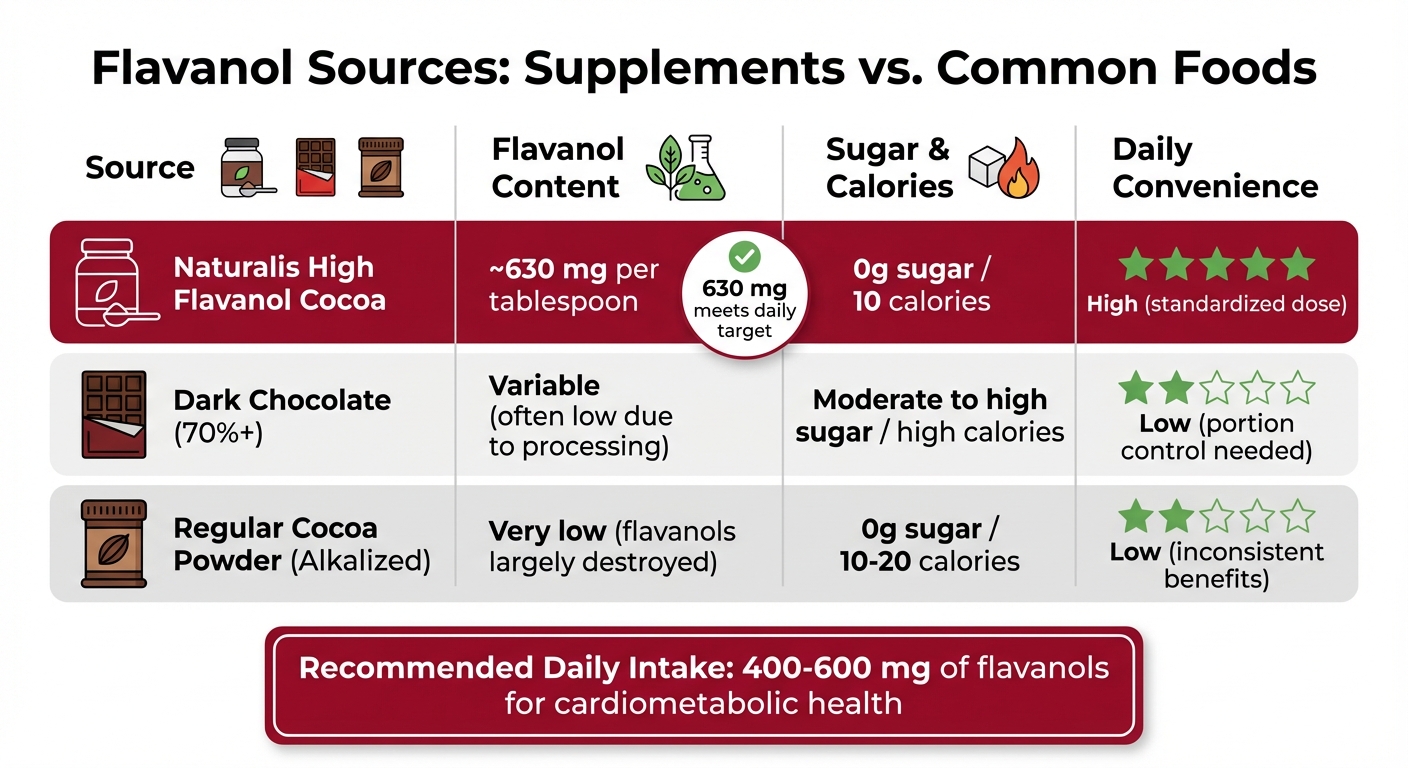
Flavanol Content Comparison: Foods vs High-Flavanol Cocoa Supplements
Why Diet Alone Can Be Difficult
Relying on food alone to get a consistent dose of flavanols is trickier than it seems. The levels of flavanols in cocoa, apples, and berries can vary significantly based on factors like growing conditions, harvesting methods, and how the food is processed. For example, one brand of dark chocolate labeled as 70% cacao might have ten times more flavanols than another brand with the same label.
Processing methods, especially Dutch processing, are a major hurdle. This process can destroy up to 90% of the natural flavanols. Most cocoa powders and chocolate products you find in stores are treated to reduce bitterness, which unfortunately strips away much of the compounds that promote heart health.
"Post-harvest handling techniques such as prolonged fermentation and alkalization will greatly reduce or eliminate the flavanol level remaining in a finished cocoa or chocolate product." – Bernard R. Chaitman, MD
Even with the best dietary choices, it’s tough to consistently hit the recommended daily intake of 400–600 mg of flavanols. Plus, trying to meet this target through food often means consuming high amounts of sugar, fat, and calories, which can counteract the cardiovascular benefits. This is where high-flavanol cocoa supplements come into play as a more reliable and efficient option.
How High-Flavanol Cocoa Supplements Help
High-flavanol cocoa supplements, like Naturalis, solve the problem of inconsistency in dietary sources by providing a standardized, lab-tested dose in every serving. Just one tablespoon of Naturalis High Flavanol Cocoa delivers about 630 mg of flavanols, which meets or even exceeds the daily target without adding sugar or unnecessary calories.
Naturalis uses non-alkalized processing to retain the natural polyphenols that are often lost in conventional manufacturing [20,19]. Each serving is sugar-free and contains only about 10 calories, making it a cleaner and healthier alternative to chocolate bars or processed cocoa mixes. Additionally, it provides 109 mg of theobromine and 12 mg of caffeine per tablespoon, offering a mild boost to mood and energy. Known for its quality and purity, Naturalis offers a dependable way to include heart-friendly flavanols in your daily routine. The table below highlights the key differences between high-flavanol supplements and common food sources.
Supplements vs. Food Sources
| Source | Flavanol Content | Sugar & Calories | Daily Convenience |
|---|---|---|---|
| Naturalis High Flavanol Cocoa | ~630 mg per tablespoon | 0g sugar / 10 calories | High (standardized dose) |
| Dark Chocolate (70%+) | Variable (often low due to processing) | Moderate to high sugar / high calories | Low (portion control needed) |
| Regular Cocoa Powder (Alkalized) | Very low (flavanols largely destroyed) | 0g sugar / ~10–20 calories | Low (inconsistent benefits) |
For those focused on cardiovascular health, improving circulation, or supporting blood pressure, high-flavanol cocoa supplements offer a practical way to enjoy the benefits of flavanols without the added sugars and calories found in chocolate. They provide a consistent, easy-to-use option for incorporating these heart-healthy compounds into your daily routine.
Creating a Daily Flavanol Routine
Simple Daily Changes
Incorporating flavanols into your daily routine doesn’t require a complete dietary overhaul. Swap out sugary sodas for green, black, or oolong tea, or try adding a splash of fresh lemon or lime juice to ice water for a refreshing twist. Boost your morning smoothie or protein shake with a handful of kale or berries. Snack on an apple every day - opt for varieties like Red Delicious, which are naturally richer in flavanols. Fresh parsley is another powerhouse, packing over 130 mg of flavonols per gram. Sprinkle it into soups, sauces, or use it as a garnish to effortlessly elevate your meals. These small tweaks not only enhance your diet but also provide key flavanols that support heart and brain health. Once you’ve made these adjustments, think about timing your intake for the best results.
Best Times to Consume Flavanols
When you consume flavanols can influence their effectiveness, especially if you’re targeting specific benefits. For cognitive tasks, research suggests consuming flavanols about 2 hours beforehand, as brain oxygenation typically peaks around that time. If your goal is cardiovascular health, effects like reduced platelet activation tend to show up closer to 6 hours after consumption. While these short-term benefits are noteworthy, the real magic happens with consistency - regular daily intake can lead to longer-lasting vascular improvements, often stabilizing after about two weeks of consistent consumption. Timing matters, but so does keeping your portions balanced.
Portion Sizes and Balance
To hit the sweet spot, aim for a daily intake of 400–600 mg of flavanols. Clinical studies examining heart, brain, and metabolic health often use doses between 500 mg and 1,000 mg per day. If you’re indulging in dark chocolate, keep portions reasonable - around 40 grams (roughly 1.4 ounces) per day. This amount delivers flavanols while keeping fat and sugar in check. One study noted that consuming two small dark chocolate bars daily (providing about 360 mg of flavanols) reduced LDL cholesterol by 5.3% and lowered systolic blood pressure by 5.8 mm Hg. To meet your daily flavanol goals without overloading on calories, focus on low-calorie options like tea, apples, and grapes. Alternatively, a high-flavanol cocoa supplement, such as Naturalis, can help you reach your target efficiently.
Conclusion
Flavanols play a key role in supporting your body's health by relaxing blood vessels, improving circulation, and helping to lower blood pressure. Their antioxidant properties also help combat free radicals, reducing oxidative stress and promoting steady energy levels throughout the day.
Incorporating 400–600 mg of flavanols into your daily diet is easier than you might think. Swap out sugary drinks for green or black tea, enjoy snacks like apples and berries, or sprinkle some fresh parsley onto your meals. These small and manageable changes can make a big difference, offering noticeable cardiovascular and metabolic benefits.
If meeting your flavanol needs through food alone feels challenging, high-flavanol cocoa supplements can bridge the gap. Naturalis provides a concentrated source of bioactive flavanols, carefully processed to retain their benefits without adding unnecessary calories, sugar, or fat often found in chocolate products. With a price of $49.69 per supply, Naturalis offers a practical, consistent way to hit your daily flavanol target while supporting heart health, better circulation, and sustained energy.
"The scientific data that cocoa flavanols may make an important contribution to cardiovascular health continues to grow rapidly." – Bernard R Chaitman, MD, US Cardiology
FAQs
What’s the best way to include enough flavanols in my diet?
To make sure you're getting enough flavanols, try adding a mix of flavanol-packed foods to your meals. Treat yourself to a small portion of minimally processed dark chocolate or high-flavanol cocoa (about 1–2 oz), enjoy a cup of green or black tea, and reach for fruits like apples (leave the skin on!), berries, or grapes. If you prefer, you can even include a moderate amount of red wine.
Nutrition experts suggest aiming for 400–600 mg of flavan-3-ols daily to support cardiovascular health. Including these flavorful and nutrient-dense choices in your diet can help promote heart health, enhance circulation, and provide a natural energy boost.
Can consuming too many flavanols cause side effects?
In most cases, enjoying flavanol-rich foods like dark chocolate, tea, or berries as part of a balanced diet is perfectly safe. But if you overdo it - especially with concentrated sources like cocoa extract or matcha powder - you might experience some mild side effects. These could include digestive discomfort (like nausea or an upset stomach), caffeine-related issues (such as feeling jittery, a faster heart rate, or trouble sleeping), and sometimes even headaches.
To keep things comfortable, stick to recommended serving sizes and enjoy these foods in moderation. For most people, there’s no need to take large supplemental doses to reap the benefits of flavanols.
How do flavanols help improve brain health and cognitive function?
Flavanols play a key role in promoting brain health by improving blood flow and oxygen delivery to the frontal cortex. This enhanced circulation can sharpen memory, improve focus, and elevate overall cognitive function. Additionally, flavanols may activate sensory nerve pathways that stimulate areas of the brain responsible for thinking and problem-solving.
Adding flavanol-rich foods to your diet - like cocoa, tea, and specific fruits - can be a simple yet effective way to support mental clarity and nurture long-term brain function naturally.